

Abandoning Print: What to Know Before You Leap

Updated: Apr 21
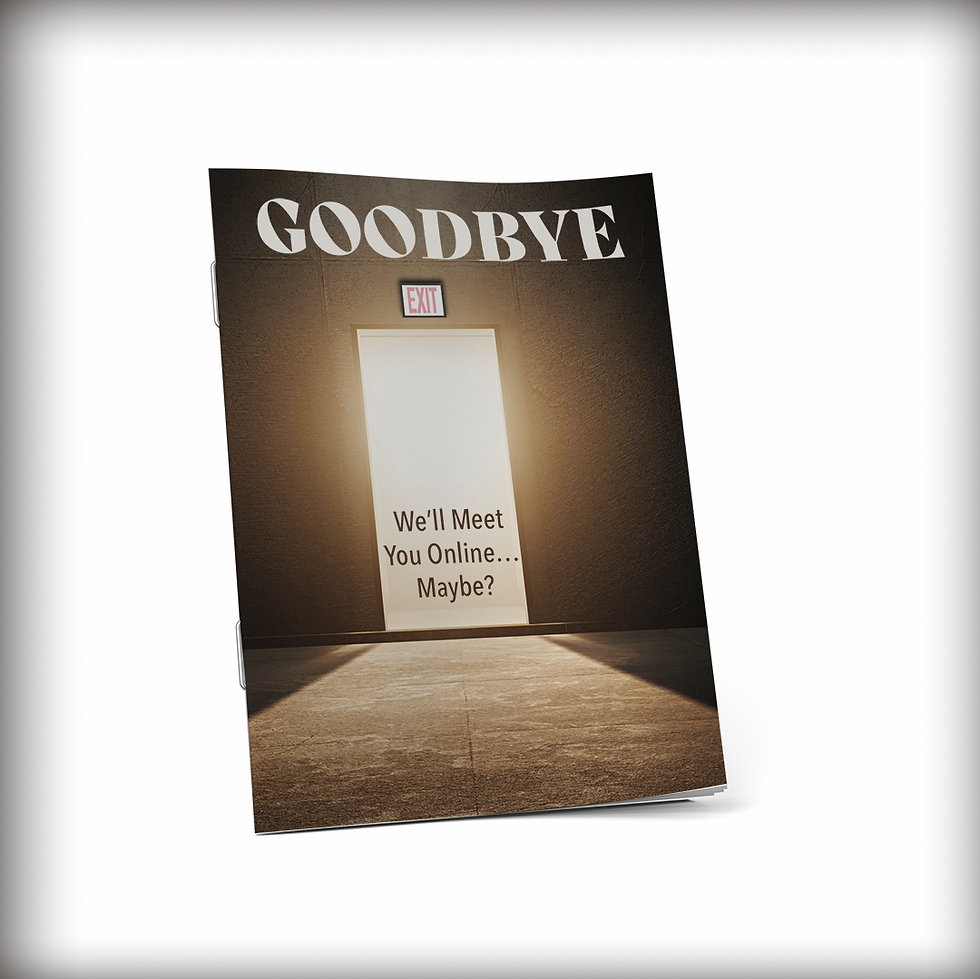
In Quarto’s previous post, I referenced the risks involved in forgoing a printed edition of a magazine in favor of a digital/online version. There have been many follow-up questions about it, so let me paint a fuller picture of the perils of this strategy, informed by some real world experience.
First of all, the premise: It’s tempting to look with disdain at the triple P’s of magazine publishing — printing, paper and postage — as they soak up precious dollars in your publication’s budget. They can typically represent between 30% and 60% of a publication’s operating budget. Making them go away can seem like a no-brainer.
Then there’s the drumbeat that’s especially loud in member-based organizations: Our audience is online already; let’s meet them where they are.
Throw in the added benefits of appearing to be (to some) more environmentally-friendly and youth-focused, and the siren call of abandoning print can become almost irresistible.
But there’s a constituency that still needs to be considered: your advertisers.
The Ad Migration That Wasn’t
The dirty truth about digital advertising: It doesn’t replace print ad revenue. Consider that print ad revenue is, indeed, declining overall, to the tune of about 9% a year. And yes, overall digital ad revenues are way, way up, but look at where the gains come from:
Social Media
Video
Commerce
If your platform can only offer display ads from your online magazine, you won’t recognize those gains. Why? A couple reasons:
Digital circulation can’t match print. Many publishers don’t even report their online circulation to their advertisers. For subscription-based publications, it’s because their readers simply don’t migrate to a digital subscription on a 1-to-1 basis when the print edition evaporates. And those digital subscriptions are generally cheaper than print ones. That doesn’t look like a rosy environment for advertisers.
Digital revenue isn’t entirely captured. The majority of digital “sales” come through all-you-can-read services, like Apple News+ or Readly. Publishers receive a royalty payment from ads, not the full cover price.
Digital ads can’t command the same rates as the print version. Some of this is basic economics: there is an infinite inventory of digital ad opportunities, while space is limited in print. But the real value is in the audience metrics. Reader ad impressions average about 20 seconds in a print edition, four times higher than impression rates for digital. What’s more, brand recall enjoys a nearly 40% advantage in print vs. digital. The print experience is just worth more to advertisers.
The Cost Conundrum
Are there savings to be had in the switch to digital? Absolutely. Consider the hypothetical case of a print magazine, enjoying $500K in annual print ad revenue with another $100K in digital ad revenue. Now suppose that magazine goes all digital, eliminating roughly half of its publishing costs in one fell swoop. While its digital revenue might increase, it’s only by a factor of $150-200K. That means that the magazine had to slash $400K of its costs to make the switch worthwhile (or $300K, just to break even).
Or look at Hearst Media’s recent experiments with Self magazine. The print publication was shuttered back in 2017, opting instead for an all-digital experience. Now, nine years later, the digital edition is vanishing, too, with content moving to two other digital-only domains, Allure and Glamour. And Hearst’s best-performing titles? Cosmopolitan, ELLE, Harper’s BAZAAR, Good Housekeeping, and Men’s Health… print magazines, all of them.
When might the move to all-digital make sense? Consider the nature of your content. If you’re producing news stories, your audience might actually crave that information on a timetable that favors digital. Or perhaps you’re serving a global audience and the costs of mailing overseas can never be recaptured through ad sales or subscriptions (or membership dues).
But don’t be fooled by the argument that younger readers, having been raised in a digital environment, will only consume content in that same space. Screen fatigue is real, especially for those who rely on digital platforms for their everyday work. The statistics are still being tabulated, but early indicators show that much of the revival in print consumption is being driven by younger readers. It’s their opportunity both to break away from the constant chatter of digital media and to demonstrate ownership of a tangible, physical object in a subscription-based economy.
What to Do Instead
If Quarto’s recent post on print cost savings doesn’t provide enough options, consider one of the following content-based solutions:
Reduce frequency. Bi-monthly and quarterly magazines are becoming the standard throughout the publishing industry. Audiences have become accustomed to less frequent contacts, provided that the lower publishing cadence represents real value. That might mean a few more pages or a higher-quality cover stock, but both of those added costs can easily be offset by the loss of a few issues.
Make it premium. Yes, you can charge more for your product, as long as you’re delivering real value. Show your readers that some of the extra cost is being invested into better writing or artwork — or just more of the same. A higher volume of content will also help to feed the digital beast, for those with an online content channel.
Be selective. Niche audiences boast loyalty that outstrips that of a general interest audience. Try focusing your content toward a specific constituency and then market to that group, offering exclusivity. By targeting you readers with greater precision, you’re also performing a service to your potential advertisers, saving them the extra step of market research.
None of this is to aver that digital-only doesn’t make sense in some scenarios. Digital has plenty to offer. But it should be saved for the functions at which it excels: speed, frequency and disposability. A thoughtful, leveraged approach to digital content can be a winner. But if it’s a Hail Mary intended to cut costs, the outcome can be disappointing at best, and catastrophic at worst.
Quarto Creative has more ideas that can juice your publishing program, both in content and in production. Talk to us about your biggest headaches and let’s get you a solution you can afford. Email us at contact@quartocreative.com.


Comments