QUARTO CREATIVE


Episode 6: Local Time
Covering the Spread
Episode 17: Did You Listen to My Mixtape?
Louanne Welcome to “Covering the Spread, Magazine Design for the Next Age,” a monthly discussion of all things related to our favorite medium, magazines.
Scott Whether you’re a seasoned designer, an aspiring creative, an editor or publisher, or just someone who appreciates the art of storytelling through visuals, this is the place for you.
Louanne I’m your host, Louanne Welgoss from LTD Creative, a graphic design firm located in Frederick, Maryland, and I’ve been working on publications for thirty-two years. You can see our work at LTDCreative.com.
Scott And I’m Scott Oldham from Quarto Creative, who’s been making magazines for twenty-five years. You can see my work at QuartoCreative.com. And on this podcast, we’ll chat with industry experts, designers, editors, and production pros to uncover the secrets of all things magazine.
Louanne It’s time to turn the page and what you thought you knew and reimagine the future of publishing.
Scott Welcome to Covering the Spread. If you are in your fifties, today’s episode is just for you. It’s all about a magazine that you didn’t even know you wanted until some genius came up with it and put it right in front of you, which was the experience I had when I heard about Geezer Magazine — a magazine just for Gen Xers. And today we are fortunate to have the publisher of Geezer magazine with us. Laura Lebleu. Welcome to the show, Laura.
Laura Hey, thanks, Scott. I love that — that you just didn’t know you needed until it landed in front of you and you went, “Oh my God, where have you been?”
Scott This has been on my mind since we started talking, the visceral reaction that I had. And I wonder if you’ve had other people relate this to you. And I’ve since confirmed, when I tell other people in our generation about this magazine, I read an article — one of the many interviews you’ve been doing lately — and I saw the title and the premise, and, without knowing anything else, I said to myself, “I want one. I want to be a subscriber to this right now. I don’t care what it looks like. I don’t care how good it is. I want one of these magazines.” And I’ve never had that experience with any other publication in my entire life or career. First of all, have other people said that to you? And second of all: if so, why? Why are we so passionate about convening together as a generation when we’re supposed to be the generation that’s completely apathetic and cynical about things like that?
Laura First of all, I love that that was your reaction, and thank you for sharing that with me. And yes, that has been a common refrain. And I have a couple of theories. My first of which is that we are the notoriously ignored generation, right? So to finally have someone just come out with a magazine that is geared specifically for us — for our common collective experiences, that talks in a really relevant way about what we’re navigating today — is wanted because no one’s really bothering to talk to Gen X. We’re still not getting the kind of attention that that we deserve. And also, holding hands with that idea is that we are a print generation. We react viscerally to print. We all grew up with magazines. To me, a magazine is a very sort of tribal choice. It shows who you are, what you believe, what you love. And so to have something that is a print-only magazine that really is just made for us, makes us all feel like we’re being seen and appreciated. And it’s being expressed in a way that completely goes to the heart of our generation. You know, we lived through the boom years of when print media was the tastemaker, was the culture maker. I think we’re all ready to see that print revival now. I don’t know if I’m going to be Graydon Carter anytime soon, but I feel like we understand how magazines bring us together. And it feels good to have someone talking about the things that no one else seems to be really talking about.
Louanne I love that the things that we’re talking about, though, aren’t the things that they’re shoving down our throats in other places, which is how to take your vitamins and how to stay healthy. And when to get your colonoscopy and all that other stuff — very health-related things. But we’re talking about shared experiences that all been through at some point in our life, and then incorporate it back into what our age is, right? It’s stuff that you want to read that is timeless as well.
Laura Oh, thank you. Part of the law is that AARP came at me when I turned 50, and I almost lost my mind, and I burned my card and I was like, “How dare you? No thank you, sir.” I have no animus toward AARP. And they do what they do. They’ve been doing it a long time. They do it well. But just because of the nature of who they are, they cannot have a raw conversation. They’re not going to publish a story about going to a 50+ sex party and what that was like, and the lessons learned about midlife sexuality and consent and all the things that come out of a story like that. AARP is not going to be touching that with a ten-foot pole anytime soon, so that would be good to do it very differently. I had to use a ten-foot pole metaphor for a sex story.
Louanne By the way, listeners, that story is in the latest issue. So yeah, you gotta subscribe if you want to read it.
Laura Yep, yep, you sure do. Because we are print-only, baby. You know, I do put some stuff up. We have a Substack that I’m really growing, and bringing people together there. If people are going to drop cash on a magazine, especially these days, I want to make sure they know what they’re getting. But for the most part, all of our content is just in print form, and you have to hold it in your hands, get yourself a glass of wine or a cup of coffee, turn off all your electronics and just sit and enjoy it.
Scott And we should point out that it is the thing that you are going to be holding because it’s big. This is a large magazine. You’re not going to tuck it under your arm or fold it over to read while you’re at an airplane. This is the thing that you’re going to be concentrating on by design.
Laura It is 11”x15”. So it is Interview magazine sized, but it’s heavier paper weight. It’s 80 pound paper, which is 30% recyclable, Forest Council-certified. I like to say this is a hand-to-hand combat magazine. If you need to defend yourself with a magazine, you come to do that with Geezer. That also means that it was designed to live on your coffee table. Like it’ll be a beautiful spread where people come in and they look and they go, “Oh my God, what is that?” And you say, “Well, you know, it’s Geezer,” and have a story to tell around the magazine itself. So there’s nothing about this that is disposable.
Scott So let’s hear that story. You told us a little bit about the origin of it, but tell us about what is now Geezer’s first year of publishing.
Laura So we just published our third issue. The first one came out in November of 2025. The other bit of the lore is that, yeah, I was in the shower when this idea came to me and I started to get back into magazines and I got a few. I got Adventure Journal. I got all these print magazine and they were like, Mountain Gazette, even bigger. It’s 11”x17”, but most of these magazines were really outdoor, adventure sort of things. And I thought, “Well, that’s lovely.” And they have beautiful pictures and great stories, but not everyone wants to go bashing around in the backcountry. We need something that has a larger storytelling aperture. I thought, “Holy hell, I’m going to make a print magazine and I’m going to call it Geezer.” And I got out of the shower and I started working on it.
Louanne How long was that shower, though?
Laura Oh yeah. I don’t linger. I get in, get out, kind of gal, you know. So it was like, boom. They talk about those Aha! Moments — the eureka moments. And it was just so clear to me. Of course, everything I’ve done in my life has kind of led to my ability to do this. Having a background first in theater and then as a writer. I’ve always been a writer, and I’ve been writing for other people my entire life. That was another reason that I simply had to do this was because I turned 50 and I realized if I didn’t actually create something that felt like it was my vision, and what I wanted to talk about and see in the world, I mean, it sounds very egocentric, but as a writer, as a creator, as an artist, after 25 years of putting all of my creative energy into other people’s projects, I thought, “I don’t want to die without making something that I feel proud of, and that gives me a way to express myself.” I think we’re all just kids who want to see our artwork on the refrigerator. That’s another reason Geezer exists.
Louanne They don’t even make magnetic refrigerators anymore. That’s just a shame.
Scott So as a slight sidebar here, Laura, you mentioned that you have a theatrical background. How do you think that helps you as a writer or as a publisher?
Laura I started doing theater when I was ten years old. I’ve always been a performer. I love to direct these days. I lived in New York City for ten years, and I actually had a small theater company, and I produced our shows. And if I had not had this full kind of liberal arts theater background, there’s no way in hell I could make this magazine. Because everything that I learned in the theater, I have applied directly into making this magazine. It’s about having a vision. It’s about being able to connect with people. It’s being able to communicate clearly what your idea is. It’s about asking people to be a part of something. That’s a beautiful thing about theater, is it doesn’t happen in a void. You have a cast, you have a director, you have designers. You have so many people who come together to bring this one vision to life, and that is 100% the same process that you have to go through to create a magazine.
Louanne Yeah, I never really thought about that. But you’re right. For one theatrical performance and all the work and all the people involved.
Laura It’s huge. There’s so many things to think about. You have to juggle so many different balls. And the same thing with me: I’m a solo show here. I have 15 different contributors in issue number three. I have to shepherd every single one of those stories through to completion and work with the designers to make sure that we’re getting the right design. And I have to have the vision myself about what I want, editorially speaking. I’m so grateful to have all the skills that I learned through my theatrical background and to see them be applied to something like this.
Scott So the big difference, obviously among many, is that you don’t get the immediate audience reaction. You don’t get applause when you put out a magazine. What kind of response have you been getting that’s given you the courage and the incentive to move on and keep doing it?
Laura As much as I do love that immediate gratification of getting on stage and shaking your jelly, doing your thing, and having people applaud, there’s something equally — if not more — gratifying about going through this entire process, putting it out in the world, and then getting a message from someone who said, “Oh my God, I needed to read this. Thank you for this story,” or just “Thank you for the magazine.” And people have been vocally supportive of what I’m doing. And again, I feel like it’s because it’s for our generation and we’re going, “Oh my God, is this what it feels like when someone pays attention? How delightful.”
Scott And how much of that do you think is predicated on our age and just this stage of our life? For example, had there been a magazine for Gen X when we were in our thirties, do you think it would have resonated in the same way that this seems to?
Laura I don’t think so, because in our thirties we were all so heads down — careers heads down — and raising kids. I feel like, what we’re going through now — and this is definitely what we talk about in this magazine — is the weirdness and the surprising aspects of middle age. I don’t think this would have hit the same if I had created it 15 years ago. 20 years ago.
Louanne We’re not retired, although some of us are, but we’re not technically AARP because we’re not retired persons yet. But we’re gathering the steam to be in that place.
Laura There are so many of us who, financially speaking — that’s another thing we talk about — that don’t see retirement coming. ever. Our experience is so different from the baby boomers. We were raised under such different circumstances than the generation before us. I feel like that’s why we have to have these conversations, because these are not the conversations our parents were having.
Louanne Interesting. So I imagine that when people give you thumbs up and feedback on things, they also have ideas that they want to pitch by reading one story or they think, “Oh, that reminds me of such and such. And I’ve got a great idea for an article.” Do you then reach out to them to write something? Somebody need you maybe not have connected with, or do you stick with the people that you know?
Laura This is one of the joys of creating this magazine is meeting new people, meeting new writers, having people pitch me their stories. And sometimes they just land straight in my heart and I’m like, “Oh my gosh, this is 100% ‘Yes, please.’” Honestly, if anyone listens to this, I’m about two months behind on getting back to a few people on the pitches that they sent me, so I really apologize. That’s next week. It’s on the calendar. I’ve been very lucky because this is another kind of a theater world. I’ve built a lot of relationships over the years. Even before I started the magazine, I started to create the network of writers and creators who would come together to be a part of this magazine. Now, issue number one was interesting because it was definitely a “Hey, you guys, I got a barn. Let’s put on a show. I’m gonna make a magazine.” I think we put out one call for submissions and tumbleweeds rolled by. There were some crickets. And so I was working with a guy named Paul von Zielbauer. He and I worked on the first and second one together. He’s moved on to his own Substack right now. We were like, “How are we going to create a magazine that is going to be interesting and tell the stories we want to tell?” And so we just unleashed the hounds on all of our connections. I asked every single interesting person I knew. And this is when I realized the power of print, because pretty much to a T, every single person was like, “Yes, I want to be a part of this.” Digital is fine, and it’s nice to be in a digital publication. Absolutely. I’m always thrilled when I’m invited, but being a part of a print magazine that you can hold and share and won’t disappear into the digital ether is a very compelling situation for people. Departments are the easiest things to pitch. I have one called “That Thing I Love That I Won’t Shut Up About,” and the one that came to me that I published — I gave almost an immediate yes — was this wonderful writer named Elizabeth Hudson who sent me a piece that she had already worked on about how Metamucil is the Tang of middle age. It’s like, “Oh, we’ve switched from one orange powdery drink to another…”
Scott And it tastes about the same.
Laura Yeah, right. Different results.
Scott I don’t know. Tang kept me pretty regular as a child.
Laura It was just written with such fun. I’m always looking for humor. We don’t want to be just a series of cranky Gen X complaint magazine articles, right? I’m looking for humor. I’m looking for joy, but I’m also looking for realness. One of the other articles that was pitched to me in issue number three is all about sibling relationships. This is written by a woman named Wendy Paris, who’s an author of many books. And I thought, “Oh my gosh, yes, that’s such a huge thing in midlife,” because now is when our siblings start to come back on a more consistent basis, because our parents are aging. We’re dealing with a lot of things that bring siblings back together.
Scott And then you’re soliciting submissions through the Geezer magazine website, right?
Laura There’s actually a form that you can go and send me a pitch. If you have something written, you can attach it there. The main thing is that, in developing the editorial ethos of Geezer, I’m committed now to not publishing anything that I’ve read, heard, smelled, tasted, touched before. I don’t want to just regurgitate a top ten list of places to go when you retire. I’m looking always for unique angles on the aging experience. At this point, I’m more interested in nonfiction narrative that does tell a unique story and has some research and reporting behind it.
Disclaimer The views, thoughts and opinions expressed in this podcast are those of the hosts and guests and do not necessarily reflect the official policy or position of any organization, employer, or company they may be affiliated with. Covering the Spread is intended for informational and educational purposes only. While we explore topics such as design trends, industry practices, and future predictions, the content shared should not be interpreted as professional advice or a definitive guide. Listeners are encouraged to conduct their own research before making decisions related to magazine design, publishing or business strategy. We may reference or discuss third party content technologies or companies. These mentions are for context and commentary purposes and do not imply endorsement or affiliation unless explicitly stated. Additionally, given the ever-evolving nature of media and technology, some discussions may become outdated. We strive for accuracy, but we make no representations or warranties about the completeness or reliability of any information shared. Thanks for tuning in and enjoy the spread.
Scott So what do you feel is the optimal balance between nostalgia and the kind of present day reporting that you’re talking about?
Laura I never want Geezer to feel like we’re just going, “Oh, man. Remember back when we drank out of the water hose and came back home when the when the lights turned on?” Probably about 30-35% is just fun nostalgia: looking back on the things that brought us together. It might be just a page of lunch boxes, things that are totems of our childhood. I don’t know if you’ve heard of Inspirational Skeletor, but there is a page dedicated just to Inspirational Skeletor in issue number three. It’s basically Skeletor, telling you how to get your life together and it is inspirational. I truly love it. It’s definitely weird. I have an eclectic sensibility, and that’s where most of the fun, funky nostalgia shows up.
Scott You’re a first-time publisher with this. If you had it to do over again, what would you do differently for your first year of Geezer?
Laura Oh, I didn’t make any mistakes at all. It was pretty much perfect. No notes. Oh my gosh, mistakes were made. Top things that I would change when we published? Issue number one: In a fit of exuberance — and it seemed to make sense at the time — I ordered 5,000 copies because I thought, “Everyone’s going to want this magazine. Who doesn’t?” And I think that here, nine months later, there’s probably about 2,500 of them still sitting in the warehouse, just waiting to be loved or purchased. People can purchase single issues once the next one has come out. So if anyone wants to get number one, you can. But anyways, yes, I have scaled back the number of magazines I print, now that I understand a little bit more what the demand is. That’s number one. Number two is I should have marketed this a lot earlier. I think I was so focused on just, “I’m going to make a magazine and once people see it, they’re going to love it and they’re going to want to buy it.” If I could go back and I could change something, I would have started talking about Geezer maybe six months before we even had launched the print magazine, because what happened was, then I had the magazine and I had to build our community at the same time. Even after the magazine had come out, I spent a lot of my time getting the word out and doing the marketing. If I had put some of that infrastructure into place before issue number one, I think it would have been a much easier road to do that.
Louanne It would be hard to do the marketing when you’re so excited to build the magazine.
Laura Exactly. Exactly.
Louanne From your shower moment to the time that you got your magazine out the door, what was the time period between those?
Laura I think it was about six months.
Louanne You didn’t even come up with the idea in enough time to market it before you worked on it.
Scott So how’s it doing as an ongoing concern?
Laura We are at right around 525 — maybe a little more — annual subscribers, which is wonderful. If I can get to about 1,000 of those, it’ll be sustainable. Because I worked in technology as a writer and thought leadership for a technology company for 11 years straight, I accrued enough stock that I could sell that stock to fund Geezer. So that is where my funding has come from. My retirement fund is not as robust as it was, let’s put it that way. I also knew that now was the time in my life to invest in myself — to invest in my vision — and if not now, when? I could see, if I hadn’t have done it — if I let five years go and I went, “Oh man, that was a cool idea,” — I could just sense the regret that I would feel if I hadn’t invested in my vision and invested in myself. If I get to about 1,000, that means that the magazine itself is self-sustaining. If I can get to 1,500, that means that I can start paying myself back. If I could get 2,000 annual subscribers, then I could start to expand. I could even start to pay myself for all the work I do. By the way, I do pay my writers and it’s a sliding scale. Some people are like, “Nope, cool, I just want to be in this. It’s all good.” If you’re a professional writer and you have spent your lifetime honing that skill, I will find a way to pay you. It’s never as much as I want, but I absolutely will. I don’t want to be a part of the industry that devalues the creators. So I’ll do what I can.
Louanne You know, our parents retired and they traveled or they stayed home and did this and that. But people in our generation are retiring and then doing something else.
Laura Yeah, we are like DIY hustlers, right?
Louanne And not everything could be just something that doesn’t make money, could be something on the side. They put on events for friends or whatever it may be. They’re doing something substantial.
Laura That’s great.
Louanne I mean, beyond just traveling. The typical “retirement” things.
Laura Right, right. I mean, that might just also be who you hang out with or cool people. Obviously, Gen X is not a monolith. Of course, there are going to be some people who are just like, “You know what? Send me to Margaritaville. And that is where I want to be.” And I say to you, “Go get your Margaritaville on, baby. You know, you do you.” But I also feel like we are rewriting the script on what retirement looks like. And we are coming into this age, often being given the heave-ho from our corporate jobs. A lot of people have been forced into retirement. That might be another reason, because once you’re deemed no longer young and cool enough for — especially my world, in techlandia, out in Silicon Valley — then what do you do? We’ve got so much to offer. We have so many ideas and just a lot of energy and life in front of us as a publisher.
Scott Have you kind of drawn a line in the sand, or a line between Geezer and, say, the newsstand or advertiser supported model?
Laura I actually just had a conversation with a company that is interested in Geezer and starting with distribution in Barnes and Noble. So I’m like, awesome.
Scott That’s great.
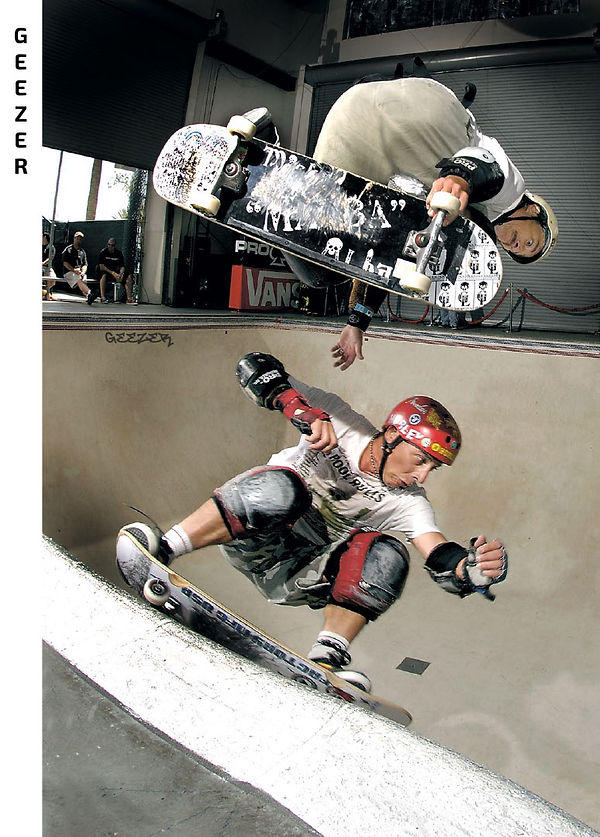
Laura Yeah, yeah. People are starting to pay attention. More distribution is better. I would love for people to have this magazine in their hands, because the experience of holding it is unique and really impactful. It’s advertising-free at this point. And that is not because I am just sitting there, fending advertisers off. That’s because it wasn’t a part of the model so much. We are subscription-driven, but I would love to have a handful of kick ass advertising partners. I did do a very analog reach, yesterday. I sent the CMO of Vans an issue — a copy of issue number three — which has Steve Alba. Amazing skateboarder. He’s on the cover and he’s skating the pool at the Vans headquarters. And I thought, “Well, this guy should probably know about this.” And also, Vans would be an awesome advertising partner there — so in the heart of Gen X. But here’s the other thing: I’m finding that Gen Z actually really digs print. So who knows? Maybe I have some weird creature here that spans a certain age range, but that all kind of gravitates into something that responds to an analog experience.
Louanne You've got to franchise, and Gen Z and…
Laura Oh my God.
Scott Millennials.
Laura Zeezers! If I could create a Geezer media empire that somehow grows into this wild publishing world where I could bring analog awesomeness to Gen Z with a different property or something? Sure. Why not? But right now it’s just me in my living room, hanging out with my dogs and putting a magazine together. But hey, dream big, right? Who knows? Who knows what will happen?
Louanne There’s something very cool about that. At our ages too, because that’s what makes it so fun. It stops being fun when you become so big that you just lose control over it.
Laura Yeah, I got all the skin in the game on this one, right? Every little win feels like the joy bomb. When things fall apart a little bit, as they do, you just get behind the mule and you keep on pushing that plow.
Scott I think anybody who starts a business, particularly where you are marketing something that is a product of your own skills, get frustrated very quickly about how much energy and time you have to spend in marketing whatever that thing is. It’s clearly not why you started the magazine, right?
Laura If I could just sit around and wear, like, oversized purple glasses and swan around in a caftan and make editorial decisions, that would be amazing. But yesterday I spent four hours schlepping stuff to the post office because I had to get some magazines in the mail. And I mean, someday, if I can be Anna Wintour of the Nevada City foothills and Sierra Nevada? Sure, that would be great. But for now, you got to just deal with what’s in front of you. I need to work on sales. I need to work on advertising. I need to make it work. That is the ultimate lesson for any entrepreneur, is that no one’s going to do it for you.
Louanne So aside from podcasts — I saw that you did an interview with Mr. Magazine — and social media, which obviously are the big ones, how else are you trying to get the word out?
Laura Events are a big thing. I was in Minneapolis a couple of weeks ago, and I did a Geezer gather there. I worked with a wonderful store called Present Company that’s in St. Paul — it’s right on the border of Minneapolis — who specializes in analog. They’ve created this gorgeous analog space and store that’s dedicated to all things analog. I reached out and I said, “Hey, I’m going to be — oh, I was traveling for a friend’s 50th birthday — can you host a Geezer gathering?” And she said, “Absolutely.” And people showed up. They wanted to see the magazine. They wanted to talk about it. They wanted to hang out with other people who were into the same things. We’re going to be doing a Gen X comedy night in Santa Monica in October. I think that’s on Sunday, October 11. Gen X, we still like to do things IRL, right? We know how to get together and we know how to party properly, even though we want to start earlier and end earlier. But we still want to do it. We just need to get home and go to sleep at some point. So that’s something I’m really, really working on. And I think I’m the only Substacker who — actually, if you become an annual member of my Substack? Hey, you get the magazine. So it’s not just digital content, you guys. It is print, baby.
Louanne Do you have a Facebook page? An Instagram page? A Bluesky page? All the others?
Laura TikTok? Oh Lord. I’m supposed to get on TikTok and I have just not gotten around to that. I’m like, I don’t know if I can handle another one. I have a pretty robust– God, I have a weird relationship with that word now, since the technology industry appropriated it. It used to be for coffee…
Scott You’re right, you’re right.
Laura Coffee had a robust aroma, right?
Scott That’s right. And now it’s your business plan.
Laura Exactly, exactly. Yeah. Sorry. This is where my brain goes. I do have an Instagram, and I put stuff out there every day. Every other day. I’m learning to embrace it. This is again part of the entrepreneurial scenario. I actually really like Threads. My handle is @Geezermagazine, so anyone can find me on Insta at Geezer magazine. And that goes on to Facebook as well. I wasn’t sure about this at first, but I was posting as Geezer magazine. Like here’s Geezer magazine, and now I’m realizing that people don’t want to talk to a magazine. They want to talk to the person. So I’m very much about, “This is me. I’m Laura. This is my magazine. Here’s what I’m doing.” And once I started to be more open and honest about who was behind Geezer magazine, people really responded to that. So authenticity is everything. As an entrepreneur, you really do have to open yourself to exploring and trying to connect with your audience in any way possible. The one thing I would never do is just start cranking out digital content bullshit. I have no desire to be a part of the machine that just is force feeding us like geese for foie gras in our sad little livers while we just have to consume all the empty calories of digital content that just is overwhelming and totally unsatisfying. So that is a machine I will not participate in.
Louanne That’s what makes getting the magazine all the more exciting.
Laura Exactly. Yeah.
Scott And what makes print such a pan generational experience now? It’s one of the few media experiences where no one is watching you.
Laura Right? No one’s tracking you. Exactly. You’re getting Geezer magazine, like. Yeah, there’s no cookies attached, right? It’s just pictures of cookies, right? There might be pictures.
Scott One of the things that I was curious about is both the thinking and the process behind producing an oversized book like this, which a lot of people in this business do not have an experience with — creating the oversized magazine, specifically.
Laura I don’t think that’s so different from creating a regular sized magazine. But when I choose our covers, I look at how the imagery will hit. It’s a little bit different than if it’s a smaller format. We can support a little more drama in our design. Thank goodness the independent magazine community is amazing. I’ve reached out to people who were publishing small magazines — not small in size, but small in circulation. Independent. There is a wonderful guy named Kade Krichko at Ori magazine, which, by the way, is beautiful. He’s taken the travel magazine genre and kind of turned it on its head. He calls it “Travel from the source.” So instead of someone parachuting into a foreign country or town and spending a little time there and reporting back, he actually gets people who live there to talk about what they love and what their experience is of their place. So it’s a great way to learn about the world. Anyway, I reached out to him — and I knew I needed an art director — and there are just not a lot of art directors out there who have experience with print magazines, because there’s a whole generation that was raised on digital. Kade from Ori magazine put me in touch with a wonderful woman named Jesse Gallagher, who designed his magazine, and she was able to take Geezer on as well. And so working with someone who understands the print process and really knows what it takes to construct the magazine itself was huge for me. So I’m very grateful to have her in my Geezer corner over here.
Scott Well, it must be a very different experience. I mean, surely when you were working as a writer, you had articles published in standard-sized magazines. When you’re seeing 500 words of your story on a page and it fills the page, versus now, when you see 500 words of your story on a page and there’s more page left than words, does it change the way you approach storytelling?
Laura We can be a little more luxurious in how we present the story. When we were coming up with our design sensibilities, and we were putting together a look and feel and playing with layouts, readability was number one. Because there are still some magazines I’ll get and I’m like, “What is this? Eight point font, reversed? Why? Why would you torture me like that?” So I wanted to make sure that the reading experience felt accessible and pleasurable. There’s something when you condense a story that makes me nervous. I wanted to make sure that our pages could breathe, that the words could have the impact that they deserve, because they’re not all crammed together. And the same with the visuals. You’ll see a good amount of white space. If we want to take a full page — this full, beautiful 11”x15” — and just put one image on it, we absolutely will. And just like fun little dumb things because I love fun little dumb things. We need more of that.
Scott So if people want to pick up a copy of your fun little dumb things, tell them where to find you.
Laura Best place to go is geezermagazine.com. That’s where you can get your annual subscription. It is $120. We publish three times a year. If that’s not in the budget right now, I 100% get that. So you guys, this is a word of mouth discount code. It is FRIEND15. You may share this with your audience. Your audience may share that with other people. I’m going to keep this up because this is a sheer word of mouth discount code. So FRIEND15 for 15% off your first annual subscription. I need to get issue number two up. But if you just want to get issue number one or issue number two — you don’t want to commit — you can also just get a single. But you can’t get a single of the most recent one. That’s the deal. Yeah. There we go.
Scott Laura, thank you so much for joining us. Great idea. And we hope it sky’s the limit. We hope that this is just the beginning of a publishing empire for you.
Laura Yeah. Me, too. Geezer media empire.
Louanne Yes. But thank you.
Laura Thank you so much. I’m so glad you found me. And I’m so glad you liked the magazine. It means the world. And it’s like I put my art up on the refrigerator and people like it. How awesome is that?