QUARTO CREATIVE


Episode 6: Local Time
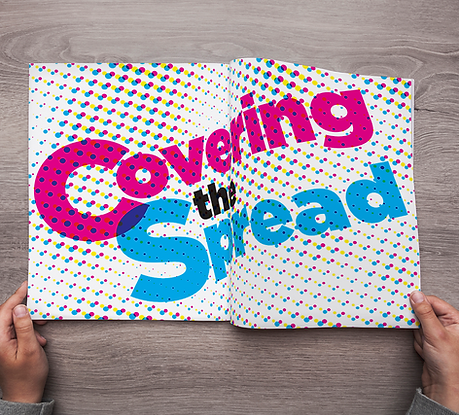
Covering the Spread
Episode 13: We Are All Print Perverts
Louanne Welcome to “Covering the Spread, Magazine Design for the Next Age,” a monthly discussion of all things related to our favorite medium, magazines.
Scott Whether you’re a seasoned designer, an aspiring creative, an editor or publisher, or just someone who appreciates the art of storytelling through visuals, this is the place for you.
Louanne I’m your host, Louanne Welgoss from LTD Creative, a graphic design firm located in Frederick, Maryland, and I’ve been working on publications for thirty-two years. You can see our work at LTDCreative.com.
Scott And I’m Scott Oldham from Quarto Creative, who’s been making magazines for twenty-five years. You can see my work at QuartoCreative.com. And on this podcast, we’ll chat with industry experts, designers, editors, and production pros to uncover the secrets of all things magazine.
Louanne It’s time to turn the page and what you thought you knew and reimagine the future of publishing.
Scott Welcome to the latest edition of Covering the Spread. We are joined today by the creative force behind the Publisher Podcast, the Publisher Newsletter and the main voice behind Media Voices, a leading light in our industry, Peter Houston. We’re very, very honored to have him with us here today. Welcome, Peter.
Peter Hey, thank you very much. Thanks for having me. The first thing I need to say is I’m only half of the publisher podcast. My co-host Esther and I have been doing it together for ten years, actually ten years. This year, I actually checked: We’ve done 400 episodes, which is slightly terrifying.
Louanne I didn’t even know podcasts were a thing ten years ago.
Peter We’ve been so lucky. We’ve interviewed everyone from Nick Thompson at The Atlantic to Kat Craddock at Saveur. This season, we’ve got Ben Smith from Semafor. I just spoke to Dale Lawrence who’s at Variety. And tomorrow I’m talking to someone who’s based in Ghana and publishes a news site for the Global South. So we talked to all sorts of different people and that’s fun. The idea that a news service is trying to catch people out, we never do that. We always try and learn from people. It’s classic B2B in that sense. So yeah, it’s been a lot of fun. I’ve been in magazines for 40 years next year, which is equally terrifying. Again, mostly B2B, everything from semiconductors to theme parks. Analytical chemistry. And I also published with my wife, Joanna, an independent magazine about making magazines. We did four issues. It’s on hiatus at the moment. It’s called the Grub Street Journal, but hopefully we’ll bring it back. Feels like we’ve kind of got some unfinished business with that one. So I’d quite like to bring it back. Maybe next year.
Louanne Well, a lot of what we’re going to be talking about a little bit is bringing back the craft of magazine making. We actually have been told that you’re not a print pervert. Or are you a print pervert?
Peter I guess it depends. I guess it depends on the context and who’s making that distinction? I’m not. Okay, so let me tell you why I’m not a print pervert.
Scott And then we should define this for people. This could get us banned on Apple if we don’t define our terms very carefully here.
Peter So my definition of a print pervert is someone who loves print just because it’s print. For me, just because something’s in print doesn’t make it special. Anyone can make a magazine, right? Not anyone can make a great magazine. From my point of view, you don’t get a free pass just because you put something in print. And in that sense, I’m not someone you know gets the magazine out the wrapper and sniffs it and gets all excited just just because it smells good. You know, my wife says, “Smelling good is not a business model.” I think that part of the print scene at the moment, I find a little bit disingenuous where — I could maybe accept being accused of being a print pervert — that I do love print. I love a really well-made magazine. I love a magazine that starts well, finishes well, and everything in between fits. I love the design. I love the words. I love the way it feels. I love having them on my shelf. So yeah, in that sense, absolutely. I love print and I’ve become a kind of accidental print evangelist through some of the work that I’ve done. Most recently I did the “Inside the Print Revival” report. And it was so much fun. I got to talk to some great people and learned so much doing it. So yeah, I don’t know, maybe guilty as charged, I don’t know.
Louanne I think we all are in a way. I mean, I guess I’ve never really used that terminology. I love it though. But I think every designer who’s been around for a while is a print pervert.
Peter Covering the Spread needs to do print pervert t-shirts, merchandise. I do think we all we all do have that. We do have that aspect to what we what we love.
Louanne Well, in that case though, then we can go with the whole “Print Is Dead” narrative.
Scott Oh, let’s.
Louanne Talk about that. Which is not– we don’t think it’s dead. Tell us about this narrative that–.… What are your feelings on that topic?
Peter Again, it depends on the context. I think in in many, many ways, it’s true. I think, if you look at the newspaper space, particularly, newspaper circulations have been falling since the ‘80’s, long before the internet sort of bludgeoned them. Mass market print in magazines is dead to a large extent. That’s not right. It’s not dead. It’s just absolutely nowhere near what it used to be. And I talked to a fair number of newsstand publishers, the Condés and the Hearsts. And in the UK we’ve got Immediate and Bauer and those guys, and they still sell loads of magazines on the newsstand. So it’s not dead. But it’s not what it used to be. And they’re finding ways to do stuff to revive what’s left. So now it’s a weird one. So as I said, I’ve been doing this for 40 years, and I know a trope that gets rolled out all the time is that scene in Ghostbusters, where– is it, Egon? Yeah, it’s Egon says, “Print is dead.” It’s a scene in that movie that was made 40 odd years ago. So it’s been talked about for a long, long time. I think part of the problem with the “Print Is Dead” narrative, it’s become a little bit of a self-fulfilling prophecy.
Scott Well, let’s unpack that. How do you recognize the ways that the print industry — and I was talking about magazines, obviously in general — have undermined their own cause?
Peter Let’s go back to … whenever… 2000, and everyone got really excited about digital. But after that, once it started just building momentum, everyone got really excited about this idea of digital scale. The investors got excited about digital in ways that they didn’t get excited about legacy products. I used to talk a lot on the podcast about bean counters, and I think the bean counters took over, and in that sense, the rise of digital was great cover for cost-cutting. “We can send emails out. It doesn’t cost us anything,” or “We can put a website out. It doesn’t cost us anything.” And that actually isn’t true. It was just that the costs were buried somewhere else. But print costs are real. Whether that’s the actual cost of print, the actual cost of paper, the actual cost of distribution, those costs were very, very visible. And when you started to get people saying, “Well, making this magazine costs us all this money; making this website doesn’t cost us as much. Let’s lean into the website.” And at that time, digital advertising rates, CPMs on advertising digitally were really pretty good. So it became an excuse for cutting costs — profitability, play. We got excited about the idea of not having to wait three weeks to see the stories that we put together, or the idea of being able to use video or audio. And that was exciting for people that had only ever worked in print. So I think all of that fed into this idea that, “Well, print’s kind of an old-fashioned thing, and maybe we shouldn’t be worrying too much about it. We should be looking at this bright new shiny thing over here.” I think that went on for 20 years.
Louanne Yeah, yeah, it’s definitely affected some of the work that we’ve done, where they’ve literally just killed the magazine and opted to go completely digital — not even a flip book or a custom page, just content online and pushed via email or however else they push it.
Scott But then we know the next part of the story where the advertising falls apart. And they end up losing more money than they would have spent if had they kept the print magazine alive.
Peter But it’s also that kind of thing where this self-fulfilling prophecy idea: “We’re not investing as much in print.” So that starts to go down the way. And digital is not growing as fast as we’d hoped it would grow. And those two lines don’t meet properly. And then we have to say, “Okay, well, we better cut some costs.” And nine times out of ten, it was the print guys that got cut and the whole thing starts. It’s like a reverse snowball, right? It just gets smaller and smaller and smaller as it rolls down the hill. But print is kind of coming back, and it is fitting into people’s strategy today, in a way. People are saying that there is some worth to it. We’ve been talking about “Print Is Dead” for what? 20+ years now?
Louanne But it never did die.
Peter No it doesn’t. No, it’s part of that report. I think one of the numbers that we had in that report was that the print revenues globally are about $80 billion. That’s a pretty big industry, $80 billion. I also think sometimes we forget different markets respond differently. Japan at the moment has a huge print market. People still buy daily newspapers in Japan. So there’s this whole thing of, “Well, it’s not working here, so it must not be working anywhere.”
Louanne So what is fueling print’s renaissance then? What do you think it is?
Peter I think there’s loads of stuff fueling the print thing. Some good, some bad, some positives and some negatives. The negative is digital revenues are not what people wanted them to be. Ad rates collapsed. Traffic is maybe not collapsing, but is definitely on a downward slide. I’m working — right at this moment — I’m working on a report about zero click, what AI views have done to Google search results. Not wiping out Google Search, but it’s definitely pushing it in the wrong direction from a publisher point of view. So I think that digital revenue gap has made people think, “Oh, wait a minute, we’ve still got a print product. And actually, if we look at it properly, it is profitable.” There’s no question that there’s a digital dismay in some aspects. The idea of misinformation, disinformation online is becoming more and more prevalent. So the idea that the tsunami of crap that AI is delivering, even the mental health harms that social media is slowly but surely being proved to do. So I think that the negativity around digital is making people think, “Okay, well, I want something different.” I don’t think it’s younger people that are driving this print renaissance. I think it’s really exciting to be able to say, “Oh, kids are buying magazines.” Do you remember the video of the kid trying to tap a magazine like it was an iPad?
Scott Yeah, I do.
Peter And everyone said, “Oh, again, it was probably that ‘Print Is Dead’ thing.” Well, I think the kid that was in that video is probably old enough now to be buying magazines. And I think they’re thinking, “So younger people have grown up in a subscription economy where they don’t own anything. They’ve grown up digital first. So everything is online.” And that has actually made them go, “Okay, what’s the alternative to this?” And it could be vinyl. I don’t enjoy that comparison, but I think there are some parallels. I’ve even seen some people doing cassettes. Bookstores are expanding big. Biggest book chain in the UK is called Waterstones. They’re opening new stores, and magazines are part of that. I can buy this magazine and I can put it on my shelf, on my coffee table or whatever it is. I spoke to Samir Husni (Mr. Magazine) for the Print Revival report. He says there’s three core human desires that digital just cannot service. He calls them these three ships. One is ownership, one is membership and one is showmanship. So it’s that idea that, if I’ve grown up and all I did was subscribe to music, or I subscribed to movies or whatever, and I never owned DVDs and I never own CDs or records, all of a sudden, I can own this magazine. It’s mine. I can pay my money and I can take it home. It’s mine. In other words, membership and that idea that I’m part of a community — “All the people that read this magazine think the same way as me, to some extent, about this subject. And I’ve really got that sense of belonging.” And then at last, showmanship, I think, is fantastic. It’s just the idea of showing off. “I am a New Yorker subscriber. I am an Empire Movie magazine subscriber.” So you’re showing off that you belong to that group. You can’t do that if you’re on the Metro with your phone. No one knows what you’re doing. You could be reading anything. But if you’ve got magazine, people know what you’re doing. And I think that’s part of it: that identity idea.
Scott It’s an interesting point to examine. And we don’t really talk about this aspect of it very often on here, and we probably should: What is it about a magazine? I mean, there’s lots of things that someone could go out — a media property that someone could go out and buy and own. So what is it that makes a magazine the right storytelling vehicle? You consider a media brand like The Atlantic or Vanity Fair or The New Yorker or something, who is producing a wide volume of media in addition to a magazine. What is it about the magazine that makes it the right vehicle for a particular kind of story? What is the nature of the story that suits itself to a magazine? Why is that valuable?
Peter Anyone can make a magazine. Not everyone can make a great magazine. And the brands that you talked about are all great magazines. What makes them great in print as well as in digital, is that they understand the format. You understand how it works. They’ve got great covers. When you open it up, there’s an easy way in. If I make a magazine, I don’t have to get every story perfect for my readers. I just have to get one story perfect for one reader. And if I get them with that one story and it tells them something that they didn’t know, or it tells them something that they wanted to know more about — however it resonates — they’ll buy my next issue. Now, if you tried doing that on Instagram … Have you ever tried to find something on Instagram that you saw and thought was funny and you wanted to share with someone? It’s impossible. It’s a nightmare. So the idea of the magazine is: “I’ve got it right there in front of me. I can find it again. I can show people it. I can put it on my shelf and come back to it months later, and it’s still there and it’s still as perfect as it was when I put it on the shelf.” It’s a formula in the sense of: There are thousands of ways you can do this, but you have to hit these beats every time.
Louanne There’s a nice flow to a really good magazine. Books have chapters, and everything flows easily from start to finish. But nobody realizes that magazines should have the same kind of flow.
Scott Very few people sit down and read a magazine from cover to cover in order. But if you treat it like they do, it will help you tell the story and organize the information in a way that is accessible and makes sense to people. Even if it’s only an internal device for your staff, it’s still helpful.
Peter The other thing with a magazine is it’s a boundaried experience. Whatever it is … it’s 50 pages, 60 pages, 100 pages. I can look at it and I can see, “Okay, well, that’s going to take me that long to read.” And once I’m inside it, I can say, “Well, I’m not going to read that feature because it’s ten pages. But I do have ten minutes right now that I can read this five-page feature. So I’ve got control.” Whereas I just absolutely don’t have control on Instagram.
Louanne If you have something in your hand, you know exactly when it’s going to start, when it’s going to finish. You can read the little bits and pieces. When I design, I always have a lot of call outs and as much information that people can grasp and read before they actually dive into the article to see if this is something that they really want to commit their time to. You don’t get that in a service like The New York Times. I just get a sea of text on my phone, if that’s how I’m reading it. It’s not as easy to carry around if you’re traveling, but at least we have that option.
Peter I don’t think we should burn down all the digital media properties and just go back to print. Not for a second. I think they all add value, but it’s harder and it’s harder to meet that threshold — that craft threshold — in digital than it is in print. You don’t get into the mechanics in your own mind, but the craft behind that is the important part. That’s what makes it invisible, is the skill, the expertise, the experience of the people that are doing that. And the thing that I worry is that that is actually, potentially getting lost.
Disclaimer The views, thoughts and opinions expressed in this podcast are those of the hosts and guests and do not necessarily reflect the official policy or position of any organization, employer, or company they may be affiliated with. Covering the Spread is intended for informational and educational purposes only. While we explore topics such as design trends, industry practices, and future predictions, the content shared should not be interpreted as professional advice or a definitive guide. Listeners are encouraged to conduct their own research before making decisions related to magazine design, publishing or business strategy. We may reference or discuss third party content technologies or companies. These mentions are for context and commentary purposes and do not imply endorsement or affiliation unless explicitly stated. Additionally, given the ever-evolving nature of media and technology, some discussions may become outdated. We strive for accuracy, but we make no representations or warranties about the completeness or reliability of any information shared. Thanks for tuning in and enjoy the spread.
Scott Well, you’ve mentioned several times now that not everybody can make a great magazine. So why not? Why aren’t there more great magazines out there?
Louanne Because we aren’t designing them, Scott.
Scott Yeah, it’s a little self-serving question, I will freely admit.
Peter Because you guys can’t do everything. That’s, again, a huge question. I come at this from two different points of view, if you’ll let me. One is the independent magazine landscape and one is the newsstand magazine landscape problem. The newsstand magazine landscape is money. Teams are smaller than they used to be. I used to work with this guy that had this horrendous PowerPoint presentation that he used to illustrate how his team had shrunk, and he had job titles on this presentation. And over the course of about 15 seconds, they would just burst into flames to the point where there was just him, a subeditor and a designer, where there used to be a team of 12 people. There were still some amazingly beautiful, well put-together magazines. But I think it’s hard, though, because the budgets just aren’t there for designers, for illustrators, for photographers. So many people now are using stock photos rather than doing shoots that they used to do. So all that creativity has a cost. And when you’re under pressure, it goes right with the independent scene. I think that people come to that scene with all the passion in the world for a subject, but they don’t know anything about making magazines. And that’s where you start to see they don’t follow design rules, and it becomes an art project rather than a magazine, because they’ve not got that formula in place. And that’s not their fault. No one ever taught them how to make a magazine. But the thing that they need to do is realize that they’re making a magazine, and there’s a craft involved in that, and that they probably need to go and find someone that can help them. Many times out of ten, they won’t have the money to employ a designer or employ an editor or whatever, but they should at least go and talk to those people or read some books or it out.
Louanne Well, I think there’s a common problem nowadays that if you have a computer, you are therefore a designer and can design and it can’t be that hard, right?
Scott This is a problem that, even among graphic designers, is something that is not widely understood: how much of a specialization it is, and how the skills don’t transfer to other media. And people don’t understand that paginated work is different from advertising or branding or anything else. It really is.
Louanne I’m not a very good logo designer. I can do it. People are happy. It’s a struggle for me, though. Whereas if you ask me to lay a magazine out? Piece of cake. No problem.
Peter Part of the problem with the indie side of things: These things are typically one- or two-man bands. They’re not working with experts. You’re not learning that craft by working with people that have been doing it for 20 years, 15 years … whatever. That’s just the nature of publishing because teams are smaller. They’re not bringing in younger people to learn from older people or more experienced people. I think the thing that worries me is we end up in this weird farmers’ market situation with magazines where it’s people were making magazines at their kitchen table and selling them on the weekends. But that’s not a job. There’s not an industry there. This is no longer an industry. It’s a monetized hobby.
Louanne Do you think that some of these independent magazines are suffering because the design is not up to par? It’s somebody who excels at writing, who says, “I’m a fantastic writer and I love cycling, and I’m going to put together a magazine.” But they end up doing the design themselves. And that’s not their skill set. Do you think that they suffer in the end monetarily, etc., because of that, specifically?
Peter I think the smart ones realize that and change, if they reinvest any success that they have into getting help around the things that they can’t do themselves. You’re right. A lot of independent magazines are started by designers and they look great, but the words need attention, right? And that’s where they need an editorial director. I’m a writer. We know a really good designer. We couldn’t market ourselves out of a wet paper bag. So that really impacted our sales. So you need help from marketers. But marketing and magazines are not the same as marketing tea, because it’s a membership thing. It’s a community thing. It’s about growing and building slowly. When I talk about the craft, I’m not just talking about editing and design. I’m also talking about the things that go ‘round like subscription management, distribution. A really good magazine has all these specializations going on to make it work.
Scott Every new magazine I get or I’m exposed to, the first thing I look at is the masthead, and I start counting. I try to put the names with the jobs that are being accomplished in the subsequent pages. And I’ve come to realize fairly recently — and I’m embarrassed that it took me this long to come to this realization — that is a terrible barometer for how much work is going into the publication because it masks how much other non-magazine work those same people are being asked to do. Nine times out of ten, it’s the same people who are laying out the magazine who are handling the social media graphics or (if there’s a video element to it) they’re probably doing the video editing on that, as well. Or it’s these magazine companies that are producing five or six titles, and it’s the same staff — the same masthead — on those six titles every single month, or whatever it is. And how much is being asked of such a fraction of a person.
Peter I said earlier about being excited by digital. I think part of that excitement was the idea that we got to do different stuff. “I can make a podcast,” or “I can do a newsletter.” That’s great. The problem comes when there’s not enough resources to do all this stuff. When the accountants are in charge and all they’re looking at the bottom line, that’s where I think the quality stalls. And actually, on a more positive note, I think, Louanne, you talked about this print revival idea. I think one of the things that that has done is focused people back on quality. It’s made people think, “Well, we can’t charge premium prices for this magazine unless we make it a premium product.” And I think that idea — that print has become an affordable luxury that has to be underpinned with investment, whether that’s good paper stock, great design, strong words — anything else that goes around about it in terms of membership offerings, that takes investment. And I think one of the positive parts of this print revival idea is that people have seen it as a as a profit opportunity. I think people sometimes don’t talk enough about profit. They talk more about what the magazine smells like than how much money it makes. So I want to talk a little bit about the positive of magazines. One of the ways to make a better magazine and to appreciate the craft is to understand the story structure, the pacing, the flow of a magazine.
Scott Talk a little bit about that, if you wouldn’t mind, because I think some of our listeners probably hear us talking about all of that, but we never tell them what it is.
Louanne It’s a secret.
Scott Yeah. I mean, the bell curve is probably a term they know in education, but not necessarily in publishing.
Peter The point with the craft aspect to this or the specialization aspect of it is understanding magazines as a product. People buy it, they take it home and they read it. So what makes a good magazine is if that product meets their needs. So great content is part of that. I said earlier about editorial pillars — the idea that, here’s the five things I need to talk about in every issue. So your editorial planning becomes really important because your issue has got to have those five things. And you’ve got to think about that before you make the issue, in terms of commissioning. So your plan is important to every story being the same. It can’t only be Q and A’s. It can’t only be first-person narrative-type stuff. It can’t just be big, long features. You’ve got to have a mix of stuff. It’s that easy in/easy out bit of curve idea that I’ve got from a book: nice short stories that, basically, are telling me what this publication is about. If I’m in a newsstand and I pick it up and I look at the front of the book and I see these tiny little stories — I could have five or six on a page — by the end of that page, I should know what that magazine is about and who it’s for — if it’s for me, or if it’s not for me, or if I open the back of the book and it’s the same thing. And the same thing is true inside specific stories, like box-outs, headers, infographics … whatever it is that mixes it up. Huge slabs of text with the odd image are not a good thing. We all know that, and we’ve all seen it. Just the voice of the thing, you know. What is it? How do I know this magazine is different from this magazine? The best ones are the ones that realize that they’re not writing the magazine for themselves. They’re writing it for an audience, and they know who the audience is.
Louanne I think that every reader reads things differently, and I think that readers may see a feature story that resonates better with them, but in other cases, they might like the departments better because that’s just better suited towards who they are as a reader. And then you always have to end on this fun high note, because how many times have you picked up this magazine and just looked at the inside back cover? But if it’s something fun, then you might want to go, “Oh, well, what’s this magazine all about?” You’ll keep flipping through it.
Scott The ingredient of fun really cannot be overstated. And I don’t just mean fun for the reader, although that’s obvious: everyone who wants who reads a magazine wants to enjoy the experience and have fun doing it. But for the people who make it to have fun making it is absolutely critical. Because if you’re not having fun making it, no way is anyone going to have fun reading it.
Louanne How do we get younger people interested and excited about magazines?
Peter So I think they’re already excited to some extent because they have kind of gone for this digital detox. Now’s the best time in a long, long time to get people excited about magazine publishing. I think that, as a publisher, if I’m presenting my print as a premium offering as part of a digital portfolio, then that’s exciting, right? And it’s not just, “Oh, come and work on my print magazine.” Even though we know the print market is not what it used to be. It’s, “Come on, work on my publishing portfolio. You get to do print, and we’ll teach you how to do some of the stuff that you need to learn to do print. But you can also get involved in doing podcasts, newsletters, websites, live events. As a designer, you can help us design for web and social. You can help us design branding for events or whatever. And you’re also getting to do print.” So it’s about selling the business of publishing rather than selling, “Come and work at this magazine.” I think in a really hands-on way, publishers need to go and talk to journalism schools and design schools and students that are actually learning this stuff. We sit in these jobs and we think, “Well, everyone knows that you can work on a magazine.” So I think as publishers, as designers, as people who work in the magazine industry, we’ve got to go out and talk to these students and kind of convince them that publishing is an option and it’s not just, “Go and work on Vogue.” It’s “Go and work on this B2B title, which is actually huge and has all these other facets going on. It’s a really stable business, and you can learn to do magazines there. And then one day maybe you can go and work at a magazine that you’re passionate about rather than, you know, Hog Farmer Monthly, or whatever it happens to be. But you can learn your craft at Hog Farmer Monthly.
Louanne I agree. My ex-husband learned his craft about rocks. Yeah, he wrote about rocks and quarries.
Scott If you can make a niche subject like that interesting for yourself, you can do anything. You can you can go to Vanity Fair after that, no problem. But you’re going to be spoiled if you if you start your career at Time magazine and then have to go to a specialty publication after that. That’s going to be a hard come down.
Louanne So, Peter, are you suggesting that we all take our show on the road then? You can come to the States and join us, do a tour of all the universities.
Peter Podcasts like yours are great because people learn stuff, like the academic publishing — that was a real eye-opener for me. And there’s loads of books like that.
Louanne The core stuff doesn’t change.
Peter I think pointing people at books, pointing people at podcasts, pointing people at newsletters …
Louanne The hard part is finding that stuff. You have to get through that. You Google something and you have to get through that sea of crap before you get to the real stuff.
Peter Discoverability is definitely a challenge. I think that’s where people like you guys are doing a great job, just pointing. Not everyone can know everything, right? So if we share that information, that’s the best way.
Scott Well, let’s use the power of our pointing finger right now. And, Peter, tell the people where they can find you and what you got coming up.
Peter The best place to find me is on LinkedIn. Just go to LinkedIn, search for Peter Houston, and I’m there. I don’t post as often as I probably should. I have a newsletter called The Magazine Diaries, which is magazinediaries.com. It is woefully neglected, but I do want to revitalize that, and I think I’m probably going to target the end of the year to get that going again. So as soon as I’ve got it fixed, and has a schedule, I’ll let you guys know and you can tell people.
Scott And then people can subscribe to Media Voices. Is that right?
Peter Of course. Yes. The Publisher Podcast. The website there is voices.media. And from there you can subscribe to the Publisher Newsletter, which comes out weekly. And that’s really just us talking to whoever and trying to take the key lessons from the interviews that we have with them. And that’s weekly at the moment.
Louanne Well, thank you so much. This has been fun. Of course, we love listening to anybody with a great accent.
Peter Yeah, I don’t think I have an accent, but yeah, people say that.
Louanne Well, it’s because you sound like everybody else in Scotland.
Scott At least to dumb Americans.
Peter I should definitely lean into that.
Scott Well, I echo the sentiment. Thank you so much for joining us. We’ve wanted to have you on for a long time, and this has been well worth the wait.
Peter That was fun. I could talk about this stuff forever. That doesn’t always make sense, but–.
Louanne Then maybe you are a print pervert.
Peter Oh — well, maybe we should all have t-shirts made.