QUARTO CREATIVE


Episode 6: Local Time
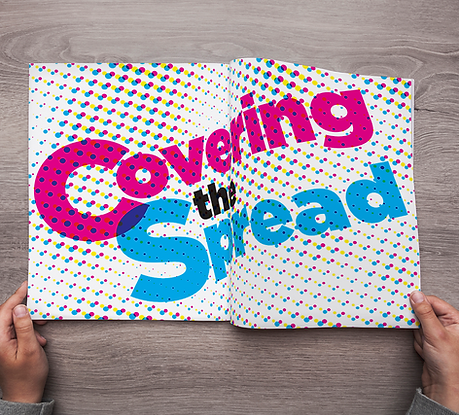
Covering the Spread
Episode 12: Word: Association
Louanne Welcome to “Covering the Spread, Magazine Design for the Next Age,” a monthly discussion of all things related to our favorite medium, magazines.
Scott Whether you’re a seasoned designer, an aspiring creative, an editor or publisher, or just someone who appreciates the art of storytelling through visuals, this is the place for you.
Louanne I’m your host, Louanne Welgoss from LTD Creative, a graphic design firm located in Frederick, Maryland, and I’ve been working on publications for thirty-two years. You can see our work at LTDCreative.com.
Scott And I’m Scott Oldham from Quarto Creative, who’s been making magazines for twenty-five years. You can see my work at QuartoCreative.com. And on this podcast, we’ll chat with industry experts, designers, editors, and production pros to uncover the secrets of all things magazine.
Louanne It’s time to turn the page and what you thought you knew and reimagine the future of publishing.
Scott Welcome to the latest edition of Covering the Spread. We are joined today by a good friend of ours, Carla Kalogeridis of Kalo Media. Carla is an expert in the field of association publications and in editorial matters in general, and we look forward to picking her brain about a subject that is near and dear to our three hearts. Welcome, Carla.
Carla Thank you. I’m so excited to be with you on this wonderful podcast.
Scott Let’s establish our bona fides here to begin with, because we’ve talked many times in this podcast about association publishing, which is a very particular niche in magazine production.
Carla I got my start at McGraw-Hill many, many moons ago in B2B publishing and ended up launching a magazine on my own and left McGraw-Hill to do that publication, another B2B pub. But in that process, I ended up being in the same office building with an association, and they needed help with their magazine and became a client. And I quickly realized that association publishing was a lot more lucrative and a lot more fun than owning my own. So that’s how I got into association publishing. That was back in 1993, and I have been in association publishing since. That has been my sweet spot. I have taken on some clients in the B2B sector and one consumer newsstand pub, but for the most part, my heart is with associations.
Scott And just for people who don’t know, just to unpack a little bit more about professional associations — taking a conservative estimate, using just the IRS data as a as a barometer, there are nearly 61,000 trade and professional associations active in the United States of America today — probably many more than that, if you include charitable and philanthropic organizations. And using that membership as a basis, there would be nearly 63 million Americans who are members or active in professional associations in one form or another. So it’s a big, big business in this country. If you’re not a member in association, chances are you either know or work with someone who is. So let’s talk about the health of this industry from our narrow slice of it.
Carla The two big challenges I see among the associations I work with and the ones I know about in a close way, are competition from other content producers, and also proving their authority and relevancy and progressiveness in their field and member value. So back in the day, I remember, like I mentioned earlier, I was with McGraw-Hill. I was working for a magazine called Textile World. There’s a magazine or association for everything. And that’s true. So this was a textile industry publication, B2B pub, and our big competitor was the Association magazine. We were just the B2B out there trying to make money. The association had the authority. The association had the legacy. The association had access to the thought leaders. That was our battle. But as years have gone on, I think that publishing has changed. And we see associations now competing with groups that are moving into their space. Some B2B publishers now act like associations. They offer memberships, they offer events. They’ve looked at associations and say, “Why should you guys have the corner on all this? We can do events, we can have a membership.” And so associations suddenly find themselves in the position of having to validate their authority and their industry, which, I think, is something new for some of them. And the ones that find a way to do it are being successful. The ones who aren’t able to do it are the ones that are struggling.
Scott So how do you see that struggle playing out on a day-to-day basis in your business?
Carla Some associations panic and they think they can’t make it on their own. And so I see them forming alliances with B2B publishers who say, “Yes, come join our group. We’ll join our audiences, we’ll do things together.” But what often ends up happening — not always — but what often ends up happening is they get swallowed up by the B2B, which is thinking profit, profit, profit. Not that associations aren’t about profit because they certainly are, but they tend to get absorbed and lose their identity. Also, I see associations trying to say, “Well, this is our this is our lane and we’re going to stay in it. You know, we’re only going to do these things. We’re not going to try to compete.” And I think that just comes from, sometimes, association publishing operations or departments that aren’t led by an individual who’s a publishing expert. They are led by a person who’s wearing three hats, who is doing the best they can. And so you find them being more reactive, instead of being strategic.
Scott Now all three of us work in this space, so we’re going to try very hard over the course of this episode, not to name names and not to offend anybody who we might be getting business from, but when we talk about these B2B publishers, I think we all know who we’re talking about. And one of the siren calls that they dangle in front of associations is ad sales. “We can make your ad sales more robust, easier for you, and it won’t be a line item on your ledger anymore. We’ll handle that in-house.” How often do you see that being the major selling point in making that transition to a B2B publisher?
Carla Yeah, I think that’s often a big a big selling point. It doesn’t always work out, though. Our company does offer ad sales for associations, but we’re very, very small. We tend to operate from a different strategy than the big publishers who have a lot to offer. They have big audiences. They have lots of professional advertising salespeople on their team. If we want to talk about advertising, there’s a couple of different models. There’s a model where the big publisher comes in and says, “Okay, association, hand us all your publishing needs. We’ll take care of it. We’ll cover all the costs, and we’ll give you a check each month of the profit.” And it sounds great, but sometimes, that check is way smaller than what the association thinks it should be. Another model that I’ve seen is these big groups will say, “Well, we’ll combine our circulations and we’ll offer the advertiser package. They get to advertise in the Association magazine and our B2B magazine, and we’ll put them over here and over there.” And again, it sounds good. And maybe from the advertiser’s perspective, it sounds good. They’re really spreading their exposure to a lot of different audiences. But again, the association often ends up making a lot less money than if they handled it differently. So in my personal experience, the group that comes out on top is the big B2B publisher, not the association. And we often get clients back from a big B2B publisher. Again, not saying they don’t have great things to offer because they do. But I think if they do make a change, it’s from the B2B to a smaller group or to their own in-house people. It’s generally because they feel like they’ve lost the control in their identity.
Louanne Well, I think it’s more of a personal touch too. It’s not always associations have millions of members, so you want to make sure that you’re speaking to the heart of who your membership is. And reaching them personally.
Carla Yeah. B2B or for profit businesses — they are in the business to make money. They don’t want to lose clients either, but they’re in the business to make money. Associations have a broader perspective. They want members. And there’s a lot of reasons why they want members: because it serves their organization in a lot of different ways through advocacy or through other activities where they need a membership body in order to get those strategies and those goals and initiatives accomplished for the B2B. There’s a different driver.
Scott Well, when an association starts outsourcing that function, how often do you see the authenticity of the voice of, in this case, the publication suffering when it’s taken over by an outside entity? And that could be an agency like one of the ones that either we work at now or have worked at in the past or services that we offer. How is this person who has no experience with this audience going to reach it in an authentic way?
Carla Yeah, that’s a great point, a great question. People do outsource to us. We are a type of group that does that type of service, and the way that we try to be authentic is we try to do a lot of onboarding exercises where we really dive deep into the personas and the audience and the history of the organization, and talk to as many people as we can. Some associations are really great at identifying who their member is. They can just give you a wonderful profile of that member. Then, that helps you as a as a publisher to have an authentic voice. You have to be nimble and flexible. You have to be able to sound young and hip, and you have to be able to sound conservative, right? You have to appeal to the audience, and the content has to be written in that way and reproduced in that way. Sometimes associations have an identity crisis and they don’t know who they are. And so your job as a publisher is to say, “Well, let’s take a look at that. Let’s take a look at what is your voice. And if you don’t feel like you have one, let’s work on that.”
Scott Well, let’s dig into that a little bit because I think there’s a situation that we have all come up against at one point or another in our past associations with associations. And that is the conundrum of how you attract young members without alienating the old members.
Carla We have to be careful when we talk about attracting young members and doing that through the lens of content. I have found that there are sometimes a lot of assumptions made about how young people want to consume content based on their age, which in my experience is not a direct reflection at all. I think it depends on the individual — how they like to consume content — and I think it depends on the industry. So I’ll give you two examples. One of our clients is a dental association and it’s for student members. They talk to me about how much they love print because they spend all day with an iPad in their hands. That’s how they do their work. They’re taking pictures, they’re filming, they’re looking things up. They’re receiving patient records. They’ve got screen fatigue. These are 20-somethings. And they love they love their print magazine. I have an experience. Some years ago, it was a landscaping association and they did away with their print magazine and went digital. And they got all kinds of grief from the audience, from young all the way up through. Because the way that audience consumed the content was while they were sitting on job site, waiting for plants to be delivered or dirt to be delivered. They’d sit in their truck and grab their magazine and get caught up on what was going on, and they were very frustrated. Think of people that typically are in landscaping, because they have to be young and fit and strong out there doing all the physical labor. They wanted the print. We might sometimes be guilty of making mistakes and assuming that, just because someone is a certain age and grew up on digital content, that is the way that they want to consume information that is relative to their profession. There is still a lot of prestige associated with print. People think that the advertisers only want digital. And so sometimes associations will go that route because they think, “Oh yeah, nobody wants print anymore.” But the advertisers aren’t really thrilled with digital advertising results whenever they ask for their analytics. And they’ve gotten, you know, eleven clicks on their ad. I always say to them, “Well, before you get upset, think about: When was the last time you’ve personally clicked on a banner ad?” Banner ads and digital ads are display ads on a screen. That’s what they are right now. They are not lead generators. Anyone who thinks they are and goes with that as a strategy is often disappointed because of the cost involved. Anything in print is automatically has a perceived value that digital content doesn’t have. And it’s beautiful and it’s an experience and people perceive that differently. I mentioned earlier that we had a newsstand publication as one of the clients. This particular publication has had a lot of major, major stars — household names — on the cover. And these individuals, when we would pitch them to let us interview them for the magazine, invariably the first question was, “Was this in print or is it in digital?” And the second we said, “Print,” the door opened. I’m not saying there isn’t great digital content. There is. But in my experience, to bring this back to the association framework, a lot of associations aren’t leveraging digital technology. They’re using it as a cost cutter or a convenience. And if you don’t leverage the digital technology, then you’re just part of the junk mail. Whereas print, because of the cost involved and the time involved, people tend to do it a little better and it tends to be a little better quality experience.
Disclaimer The views, thoughts, and opinions expressed in this podcast are those of the hosts and guests, and do not necessarily reflect the official policy or position of any organization, employer, or company they may be affiliated with. Covering the Spread is intended for informational and educational purposes only. While we explore topics such as design trends, industry practices, and future predictions, the content shared should not be interpreted as professional advice or a definitive guide. Listeners are encouraged to conduct their own research before making decisions related to magazine design, publishing, or business strategy. We may reference or discuss third party content technologies or companies. These mentions are for context and commentary purposes and do not imply endorsement or affiliation unless explicitly stated. Additionally, given the ever-evolving nature of media and technology, some discussions may become outdated. We strive for accuracy, but we make no representations or warranties about the completeness or reliability of any information shared. Thanks for tuning in and enjoy the Spread.
Louanne A lot of people are supplementing their print magazines with maybe one more email throughout the week, or more blogs on their website. I subscribe to The Atlantic, but I don’t subscribe to the print. Shame on me, I know, because I just listen to it and that’s my alternative. But the downside to that is — and I’m defeating my own purpose of advocating for print — is that I’m not seeing the visuals. The Atlantic has some amazing art, and I’m missing out on it.
Scott Well, do either of you know of an association that has a publication with an analogous ecosystem to what The Atlantic or The New Yorker is doing, to the extent that that you can listen to an article from the association publication, you can watch a video of it, you can go to an event that is co-branded with the publication?
Louanne I work with one association. It’s an online newsletter and they just killed the podcast. The downloads were incredible: 300, 400, 500 people, and they decided to get rid of it. And I don’t understand. I think that was a great asset because these are busy people. These were doctors. And I think doctors listen to it while they’re doing other things.
Carla A lot of people don’t realize this, but printing companies often have digital versions of a publication that they will offer sometimes as just part of the print. They’ll just say, “Hey, one of the things you get when you print with us is a digital print replica.” So it’s a flip book-type publication, not designed for digital — which is a totally different experience — but still, it’s something so that the association can say, “Oh, yeah, we have a digital pub.” But what a lot of people don’t realize is that even those basic technologies have the capability of hearing the articles. You click on the button on those digital flip books and there’s an option to have the article read out loud to you. I think the challenge is that the consumer of this digital content isn’t taking the time to engage with it and see what all the features are. The association is not investing in educating their members about the digital publication. They’re just saying, “Yeah, we have a digital magazine,” but it’s just a print replica. And the reason is because, of course, if you produce a print magazine and then you want to do something designed for digital, that’s a whole additional cost. That print replica is not something that most people really love consuming content on, but it does have its advantages. Like to Louanne’s point, if they want to listen to an article, they can click on a button and listen to it. It’s more for social media. If they want to post an article to LinkedIn, they can do it easily from that digital magazine. If they want to forward something to their audience and say, “Hey, I was featured in this article,” it’s very easy to do with that digital edition. So it has its purpose.
Louanne I mean, if you were to look at levels of engagement, that would be the very basic. So that would be your intro level. And I think a lot of people check it off and say, “Well, I’m doing it. Check.” And I’m actually not surprised by the number of people who simply don’t know — the number of people I have conversations with that just did not realize that you could do more.
Carla But the design for digital publications that I have worked on that are really, really good, the whole things are horizontally aligned. The letter to the editor is a video message, and then the articles that you read are designed for the digital screen, so they’re easy to consume. There’s drop downs with extra content that link off to something else. That’s an additional resource. There’s a video or an audio from the author saying, “Wow, I really enjoyed this, writing this article. One of the things that didn’t make it in the article was some research I found on blah, blah blah. And if you want to check that out, you can go to the link at the bottom here and do that.” Leveraging the technology for what it can do creates an experience that is, perhaps, worth it. But those publications that I worked on were not for associations. They were for other types of publishers.
Louanne That’s where advertising would benefit, because I think people would be more inclined to put a full page ad into one of these. These people are more excited to see that, especially if advertisers join in and create a video or a pop out or something that can stand out. These were all options. I mean, they’ve been options for more than ten years, I guess. And nobody’s doing it.
Carla It takes time. It takes money and –
Louanne It’s still theoretically, maybe, less money than printing because you’re not paying for the paper and the printing itself, but it’s so much better than what a lot of people are putting out.
Scott Okay. Cost was going to come up here eventually anyways. Let me tell a story and just see if this resonates with either one of you. Once upon a time, there was an association and its members complained that the fact that the association was putting out a print magazine meant that a) it was dated; and b) it wasn’t environmentally-friendly. So the association put up a digital version of that magazine and offered its members a choice: You can either continue receiving the print magazine, or you can experience the same content on your computer, and you may choose whichever one you want. And eventually, they got to a critical mass where the print magazine couldn’t sustain itself anymore and everything went digital. Does that sound like a familiar story to either of you?
Carla Similar.
Louanne In my case, the higher-ups looked at budgets and said, “Oh, look, that’s a really large number. Let’s cut that.”
Scott Exactly.
Louanne And that was the end of that story.
Scott The member is the fig leaf for the cost saving to the association.
Louanne But then when you look when you go back and look at how that publication is performing, it’s usually pretty dismal.
Scott Oh, absolutely. And you notice who was not included in that conversation was the advertisers. They never once said, “Hey, would you like to be on this digital platform instead?”
Louanne And that’s where all their revenue is.
Scott Exactly.
Carla I mean, we have print publications that we’re doing right now that have grown in sales significantly every single year — last year, the year before and the year before that. It’s not about the print, it’s about the value that you offer. Do you think that the advertiser really cares whether their message is in print or digital, as much as they care how much benefit they get from the advertising program? “How many people see our brand and get to know us better and buy our product or buy our service?” That’s what they want. They don’t care how. I mean, with associations, they get caught up in the money. Sometimes the board, maybe, is putting pressure or they just don’t have the money. And they’re looking for places to cut. But if you lose the value — the member value — the members don’t use that digital pub and then what happens next? You start losing members because then it’s like, “Okay, well, why am I the member of this association? What am I really getting out of it?”
Louanne I think advertisers have been told, “You can track the clicks in these digital ads. You can tell the higher-ups that this is working because you’ve got X number of clicks. And if you send it via email, you’ve gotten this many opens…” or whatever. It’s been kind of ingrained in them for quite a while that, if we put out a print ad, we don’t know who’s reading it or we don’t know the conversion rate. And so it seems like some of those people just don’t want to do that anymore.
Scott Well, they want to do it until they actually see the analytics. They think, “Oh, this will be great. We can track the ads now. We’ll know exactly who is going to our site and who is clicking on these ads.”
Louanne And a print ad doesn’t do that.
Scott Well, you have to audit it. I mean, that’s a huge expense, right? But as far as the digital advertising goes, that sounds great until you see the numbers and then it’s terrible.
Carla There was a statistic I saw from the Magazine Publishers Association not too long ago that if you don’t put your ad in print, you’re missing thirty percent of your audience. That’s a huge number. I don’t think digital is the answer. Print is the answer. I think when you do an advertising campaign, you’ve got to do everything. You’ve got to do print. You’ve got to do very strategic digital. You have to do in-person events. You have to do sponsorships. You have to do editorial content and sponsoring content. Those are the companies that really move the needle on their branding and their sales — the ones that don’t say, “We’re just going to buy digital because that’s the easy choice. And print is dead.” That is an uneducated decision.
Louanne Do you think that these advertisers who once had nice, big glossy print ads, inside front cover — and now don’t — have to put more money into their product to reach their audience?
Carla I think it has to be comprehensive, in-person events, which let’s face it: Events are content as well — not necessarily giant conferences … 20-30 people, little pop-up events. Associations have all kinds of opportunities there. A pop-up event basically reminds your audience that you’re there, right? You can do pop-ups with the content as well. A little extra bonus supplement that they weren’t expecting is bound in with their magazine or some kind of digital — something that they’re not expecting — that just pops in their inbox. “Hey, from your association, we’re giving you this.” There’s lots of opportunities for associations to create products that bring value to advertisers. They don’t have to just sit in three buckets or two buckets: web, digital newsletters and print. There’s so many opportunities, and I think associations — the ones that are doing well — are embracing that.
Scott We mentioned content and we’ve kind of given it the short end of the stick, here. We are three creative people and we’ve been talking about nothing but the business for this entire episode. So let’s just get back to basics here and talk about what we like about these as a creative outlet. How does working for a professional association suit you creatively?
Carla I love the fact that there’s so many thought leaders in an association. Most of the industries and industries’ best people are still part of the association, or on the board or they’re a member. They serve on committees. And so as a content creator, the biggest challenge in creating great content is getting the right voices, the right people to interview. Who can give you that fresh perspective? I love leveraging the association and getting access to the right people. That’s something unique in an association that it has to offer to me as a content generator.
Louanne I gotta say, I really love working with the people and learning about different products. There’s an association for everything and learning about that association’s mission and helping that content come to life in a meaningful way.
Scott For myself, this is purely selfish. I just love the opportunity to become more expert at a topic that I would not have been exposed to otherwise.
Louanne We call them armchair experts.
Scott Yeah, exactly. I can’t work in that profession necessarily, but at least I can speak about it intelligently with people who do.
Carla And it’s great at a party, right? No matter who you meet. “I work for an association in that industry.” You know, you almost always can have some relative experience through an association.
Louanne So if I have enough medical associations, I could be a doctor, right?
Scott Exactly, exactly. I’m pretty sure they would let you slide.
Carla But when it comes to association publishing, I would say the organization that I had the privilege of being part of — that really was the voice of the industry — was Association Media and Publishing, that organization. And I know many of your listeners remember that organization. We’re very active in it. Before that it was called SNAP, but Association Media and Publishing and its membership really — they were the leaders in association publishing and they were so inspiring to work for. And I had the privilege of being editor of a magazine, which was that association’s flagship publication. And I learned so much about the industry by interviewing my peers. Basically, when I took on that job, I was super-excited. And then I was super-scared because I realized that I was going to be producing content for people who are way more experienced and smarter than me about association publishing. But what ended up happening is I ended up learning so much from the members that I was serving, and it really blessed me and everything I did after that.
Scott You were talking about authenticity again: The value of having an honest-to-God photo of a member versus a stock photo or the member experience that is grounded in a full understanding of the day-to-day needs and experiences of the member of the association, rather than a historic role that the association has played in that member’s life.
Carla Everybody’s a publisher right now. Everybody’s a publisher, and there’s no limit to content on any subject that you can find. So how does the association step out from the pack? I think the answer to that is the thing that made associations what they were decades ago: That individual connection, that individual experience, the niche content, the authentic content — and authentic might mean showing pictures of your members, putting your member on the cover instead of grabbing stock photography. It takes more time. It takes more money. You have to plan the issue well in advance. But what do you gain by having your members, see themselves in your content? I think you gain a lot. You end up becoming something that they say, “Okay, these are my people. I know that person or I’ve met that person, or I was at that event where that person was speaking.” It gives them a sense of community and something that they can believe in when they try to be like everybody else. If they say, “Oh, everybody’s doing digital, everybody’s doing AI. We’ve got to do that too,” I think that’s something that can really get associations in trouble. They don’t need to be like everybody else. Interviews, articles, pictures…
Louanne It can be the trustworthy source for members.
Carla Yeah, yeah. Nobody likes to read something and then be told by someone else after you’ve posted it, “Oh, you realize that was fake, right? You realize that was not real or that didn’t really happen.” It’s an awful feeling.
Scott To be fair, we didn’t need AI to have inaccurate copy being generated for the benefit of associations. That’s kind of a favorite complaint that association members make is that “You don’t know what you’re talking about when you wrote this article about X subject. I know this subject. You clearly don’t.”
Carla If the association is facing that, get more member-generated content. Everyone loves to have a byline. Everyone loves to be to be interviewed. Everyone loves to be pictured. If you’ve got member experts, then leverage them and, quite frankly, some of the greatest experts in an association are the advertisers because they are the ones investing in research and product development. They don’t just know what’s going on in their own world. They know what’s going on with all their customers because they’re hearing from them all the time. And I think a lot of times, associations used to be, “Well, you know, the advertiser, we’re not going to interview them or we’re not going to include them in the content. If they want exposure, they’ve got to buy it.” That’s an old way of thinking. If you’re not engaged in embracing your advertisers for content, then you’re missing out on a great, great asset within your organization. And the advertisers, they’re savvy. They understand that people are smart and they know when they’re being advertised to versus when the advertiser is really giving of their own expertise and trying to give value to the member. And that is a form of advertising in and of itself. Instead of thinking, “Oh, well, we don’t have the budget to invest in AI or to invest in X, Y, or Z,” look at what you’ve already got. Perhaps you have some great editors, great content generators. Why can’t they do a road show and go out to your members instead of just relying on your members to come to you for the annual conference? What if you went out to different pockets across the country and had small pop-up meetings led by your editors — discussions, town halls, whatever you want to call them? It’s still content. It can still be sponsored and generate revenue. But it’s just a fresh, authentic way to deliver information to the member and make them more dependent on you, right? And more trusting of you. So I think there’s a lot of really creative ideas that associations can embrace with the resources they already have, and they just have to find a way to carve out time to do it.
Scott So, Carla, before we go, can you tell the people where to find you?
Carla I’ll be honest with you. You’re going to laugh. We have not had a website for a number of years, because all of our business is primarily word-of-mouth and referral. I found that the website was taking me too much of my time and energy to keep it updated and keep it something that I would be proud of. And I thought, “If I can’t do this, well, I’m going to take it down and wait till I can do it well.” But yeah, I guess if you want to find me, they’re going to have to do it the old-fashioned way. Don’t completely recommend that approach, but that is what has worked for me. It’s very authentic. It’s very authentic When someone refers to me, then I know their story and they know my story.
Scott So I’m not going to attempt to spell Kalogeridis, but if you’re looking for her on Google, it’s K-A-L-O Media, right?
Carla Kalo Media. You can find me on LinkedIn. If somebody wants to reach me, the quickest, fastest way is through LinkedIn or through carla@kalomedia.com. This has been so much fun. I appreciate the opportunity to speak to your audience and to, and to learn from both of you. I’ve admired your work for both of you for a long time, and it was just a real, real honor to be included. And I look forward to doing it again someday soon.
Scott The feeling is totally mutual. Come back anytime.