QUARTO CREATIVE


Episode 6: Local Time
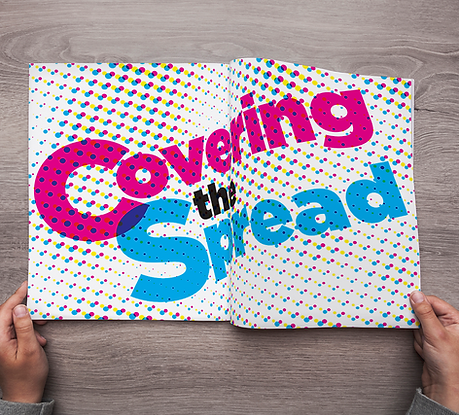
Covering the Spread
Episode 11: Ink Outside the Box
Louanne Welcome to “Covering the Spread, Magazine Design for the Next Age,” a monthly discussion of all things related to our favorite medium, magazines.
Scott Whether you’re a seasoned designer, an aspiring creative, an editor or publisher, or just someone who appreciates the art of storytelling through visuals, this is the place for you.
Louanne I’m your host, Louanne Welgoss from LTD Creative, a graphic design firm located in Frederick, Maryland, and I’ve been working on publications for thirty-two years. You can see our work at LTDCreative.com.
Scott And I’m Scott Oldham from Quarto Creative, who’s been making magazines for twenty-five years. You can see my work at QuartoCreative.com. And on this podcast, we’ll chat with industry experts, designers, editors, and production pros to uncover the secrets of all things magazine.
Louanne It’s time to turn the page and what you thought you knew and reimagine the future of publishing.
Scott Welcome to the latest episode of Covering the Spread. We’re joined today by Rob Schmidt of Royle Printing in sunny Sun Prairie, Wisconsin. Rob is a dear old friend of both Louanne and myself, and is an expert — a storied expert — on the intricacies of printing and publishing printed material. Rob, welcome to the podcast and please tell the folks a little bit about yourself.
Rob Thank you. I appreciate that very kind words, but true that we have been partners and connected in this industry for a long time. It’s a small world sometimes, right? We realize that once we’re in that design and creative space, we run across different people all over the place multiple times in our careers. I’ve been with Royle Printing for close to 38 years, on the sales side for a good portion of it — not all, but a majority of the latter years on the sales side. But just a complete joy in that space. Father of five kids, and they are all grown and living life at large. Super happy to be here and have an opportunity to share a little bit of my knowledge. You go through that stretch of 38 years, there’s been some serious evolution in the process of prints, clothes with crop marks on the sweaters and lines stuck to you, or Rubylith tools that we use to get stuff done. And the pace, I mean, just even make like a copy correction was a painstaking piece of work. Now, in a digitized world, it’s amazing how quickly things can be done. Conversations can be had halfway across the country. A new file is uploaded and corrections made and new plates on press in 30-40 minutes. It’s crazy.
Scott We’re carried on something called Print FM. Rob, I don’t know if you’re familiar with it, but it’s a podcast network specifically for printers or people who are who are involved in printing. So for that audience, let’s get super technical. Can you tell us what Royle is running right now — your presses. What are the facilities that Royle has got to offer?
Rob Royle printing — we’re predominantly a web printing facility. We do have one Sheetfed KBA press that does beautiful work — does a lot of our cover work — and then we support our customers (our catalogue and magazine clients) with other ancillary items that they may need with that press. But I wouldn’t call us a sheetfed printing company because of that. The other equipment that we have is now going to be just for web presses, capable of doing so many different formats and signature sizes that it gives customers an enormous amount of flexibility. So you can do from digest-size formats all the way up to tabloid format sizes on all of our equipment and produce from eight-page signatures all the way up to 48-page signatures. So it’s a unique set of equipment. It’s not narrowed into just one format that people might be used to working in. And then once we leave the press room, everything moves into a state-of-the-art bindery as well, with capabilities of stitching and perfect binding. We can do some various folded signatures — special gate — and then ancillary items to support those magazine and catalogers with stuff that would be for special marketing experiences, such as tip ons and bindings and other unique features. Outside of that, we’re going to reach outside for a couple other supporting vendors, for stuff like foil and embossing and stuff like that, but great coating capabilities as well on those web presses and sheetfed press to give you some character to those covers that you’re creating.
Scott Now, sadly, we all know there are going to be people listening to this who have no idea what the difference between web and sheetfed is. Now that we’ve been super technical, can we talk about the difference between those two types of presses?
Rob The simplest way to explain it, as I’ve explained it for years, is web printing is a roll of toilet paper coming in on one continuous stream, versus that of a Kleenex box, which is cut up sheets of paper. The reason that those are so different in the way that they perform is for volume’s sake. In most situations, that sheetfed press of pre-cut paper has to be folded afterwards. And there’s a cost in doing those, but you gain a little bit more control. And the speed elements of sheetfed are considerably different from that of a web press. That continuous roll of paper going through a web press allows us to produce speeds where work, producing a signature — this folded-up paper at the end of the press — at the volume of 60,000-70,000 an hour. So your web presses are going to give you that ability to produce higher volume work, more efficiently, more cost effectively, and your sheetfed presses are going to be more designed for that smaller, shorter run work — that niche publication piece that you might be producing.
Scott So as a percentage of Royle’s overall business, how much would you say magazines specifically make up?
Rob We’re about 60% magazine work and then 40% catalog work. And it can vary depending upon the year. But we’ve played a big role in various markets, those markets being association, along with niche publications and other publication markets.
Louanne We all noticed that Covid was obviously a big game changer in the industry magazines with digital — or they just didn’t publish at all — any number of things. So using that as a starting point for the next phase of magazine publishing, where do you feel like it’s changed since Covid?
Rob That was by far, in my years of experience, the worst, most challenging — and it taxes me enough to use my years of experience to get through that stretch of time. And I think companies like ours, like Royle, had to use just everything we did, manpower-wise and just creativity to get through it. But what changed? The biggest thing that we had to deal with was educating a world of graphic art that you couldn’t get what you’ve got before. Paper, as an example. You could watch how the paper inventory was disappearing quickly. And how do you tell a customer that? All customers had been experiencing the ability to get paper on demand to produce print within two to three months. We’re now starting to see lead times of four to eight weeks. To get a culture that had, for 25+ years, to have been able to get what they wanted when they wanted… And some people didn’t want to ever believe that that was going away. It was retooling everybody’s mindset that you had to really plan ahead. The lasting change that came out of that is truly just the fact that inventory, for the most part … There’s paper available, but those papers available are not necessarily sitting on a mill’s floor. Those papers are within a warehouse somewhere and they come at a higher cost. So people had to pivot and wait longer times to get their project printed. So some of them turned to other mediums: online, digital. And so they may have decided, well, I’m just going to skip the printing on this particular piece and publish it online.
Louanne And then did you find that those who made those adjustments went back to where they were to begin with, or did they say, “Oh, hey, this kind of just worked out. I can save money after all. And now I’m only going to do six times a year as opposed to twelve times a year?”
Rob I think everyone had to re reevaluate the value of print. There was a point where people froze and they weren’t quite sure what to do next. As a publisher, you’re going to tell me that you experienced people going from work. If you were mailing a magazine to people in their work environment, they’re now at home. And who’s reading my magazine? Who’s getting my magazine? How am I getting that magazine to them? And I think what really came out of that was more of an understanding and a value of how digital elements could work with print. “Do I stay in print? Do we continue on this path? Do we do it in a way that we’re doing it with less frequency and in some cases, eliminating it altogether?” There have definitely been some of those moves.
Louanne Now, what about catalogs, though? My mail lady loves me. I get a lot of catalogs. I don’t I don’t know why, but she’s like, “You keep me in business.” Even though I don’t really order from a vast majority of these catalogs. I prefer to have the catalog to do my shopping. I’ll then go online and order it, but only if I don’t see it in the catalog. I tend not to even think to go online in the first place.
Rob The catalog companies understand and are focused on cost to get into the mailbox, right? So they’ve found a unique and different ways to get there. I think the magazine element — that standard 8 3/8" x 10 7/8", or somewhere in that size — still seems to be the right feel for a magazine. I don’t see anyone producing a digest-sized magazine and mailing out as a letter, but catalogers know that they need to give that experience to somebody, that connection to drive them to the website. I don’t think that plays the same role as much in the magazine world. We want to drive in the magazine world more: that opportunity to sit down on a couch and read the magazine and shut the world out a little bit. But there are two different factors, two different animals, in my opinion.
Scott Was there an analogous retreat among catalog publishers as a result of Covid? Did they just decide we’re going to just push everything online or push everything out by email?
Rob I think it’s true that there was some change to that. What became costly, or more costly, because of paper rates, postage rates that have continued to go up, is that ability to get into consumers’ hands. That non-customer, my prospect, those prospecting folks — when it was cheaper, it was easy to continue to send those catalogs, but now they have to refine who they’re reaching and the types of clients that they’re going to and how they’re reaching those audiences. The prospect element becomes a much more expensive cost now, and you have to be able to make sure that you’re buying the right list and managing the right people that you’re connecting with in order to make that a value proposition on the print side. And so they’ve gone down different paths again. On sizes, we’ve seen digests … 6"x9", 6"x10 1/2", smaller catalogs, standard sizes. And they’re able to mail some of those things at a more cost effective rate because they get into a letter rate, postal rate, where again, on a magazine side, I don’t see that strategy taking place very often.
Scott You used to send me some really massive catalogs. I mean, in terms of page size, almost tabloid-size. Do you still have anything that size or a better question, maybe, is what’s the biggest catalog in terms of page size that you ever handled from a catalog standpoint?
Rob I’ve got a longstanding customer. He still produces a large volume book and a large page count. We’re in the 300 page count with a beautiful cover that he produces on our sheetfed press. They’ve narrowed their focus and how often those are produced, but typically, an annual catalog seems to be more the trend in that space. But, Scott, you also brought up some larger sizes. We call it a small tabloid. So it’s somewhere in a 10 ¾" x 13" size piece. And we still see those. There’s some local magazines — city regional magazines, a lot of really high end-type product lines — that might be reaching a different audience based on income levels. They have a tendency to go into that plush, larger-sized piece. And we still see those in 100-200 page productions from time to time.
Scott Talking about page count, you reminded me of something I haven’t thought about in years. At the lower end of the page count, there’s a term that I don’t know if it’s still used. Is it still used: the droop test? Is that still a thing?
Rob I have somebody that I just talked to about that yesterday. They wanted to produce a piece of 12-16 pages, and they fell in love with a 45 pound paper. Sliding that 45 pound paper of only 12 pages off to do the droop test, which is designed for the post office. That test is in there because a piece that’s too flimsy might not feed well through their automated equipment. So I provided the customer with 60 pound samples as well. We have a stronger belief that those things will pass that test. But small page counts — 8, 12, 16 sometimes, have to be done in a way that they’ll get past that automated requirement.
Louanne I didn’t even know that there was 45 pound paper. I never, ever, in my wildest dreams would, would suggest that a client use that, because you might as well just use tissue paper because you can just see the other side of it.
Rob As a designer, that’s the wonderful part. You create art as a cost element today. We have to be cognizant that 45 pound is one option. But I just got done producing a big catalog of 180 pages on 34 pound CA. It’s a supercalendered finished paper, so you can go lighter, and you can produce a pretty good-looking image. And do you have a show through? Yeah. There’s elements that you have to work with and deal with.
Louanne You want to print on the nicest stuff? Which is completely done on vellum paper, white.
Rob Right. Something that looks like your computer screen shining through and nothing else.
Scott The funny thing is that for some of those lighter papers, the matte finishes give it a heavier feel than you would suspect from what the actual poundage is.
Rob Yeah, we deal with something called calipers in those papers. So your matte papers give you a little thicker caliper. They’re still the same. A 70 pound is still 70 pound. But when they make that paper, that creates a little bit more fluff in the fiber that has an impact sometimes on your print quality. If you’re going for that and you understand what those papers will produce, from a dull finish to a gloss uncoated and matte, there’s great stuff out there, and there’s still an element of creativity in looking at what you’re purchasing. I think there’s another big element in understanding what your budget is, and then the impacts of how that budget is being challenged, especially with postal rate increases.
Louanne Back when I was spec’ing a lot more jobs, I would ask for #1, #2 or #3. Is that still a common term you use nowadays?
Rob Sure. Absolutely. And so 1 is not a term I’ve ever used …
Louanne Because nobody can afford it?
Rob Right, right.
Louanne They were expensive to print on — that beautiful European paper.
Rob You might see that premium paper on an annual report back in the days. Or on a sheetfed scenario. But for the most part, just a because of cost and availability, especially on the web element, I would say the majority of the workhorses are in the #3’s and #4’s in the web printing industry. And there’s quite a bit done on a #5 grade paper before we step into that SCA paper that I spoke about. That’s even a lighter grade, lower grade sheet of paper. That whole range is there, and that’s a pretty common discussion. Yet we still label that on every one of your quotes that you would receive from your printers. They should be identifying the grade level, that one two, three, four, five grade. That’s the grade of paper that you’re purchasing.
Louanne Regarding paper, tell us a little bit about where you get the paper. I know there’s a lot of people who just think you just call up your paper rep and say, “Hey, send a roll.” But if I were to tell my clients, “Oh, well, it’s a mail order, or it’s their house stock…”, tell us a little bit more about what that means.
Rob Every printer manages that a little differently. Let’s start with the basics. The mill order you mentioned: We work through merchants that then contact and set orders up with the mills. And then the mills have particular print or paper runs when they’re making that paper. So if we’re designating, let’s call it a 60 pound, #3 gloss paper, fairly standard sheet, those are being made maybe every three weeks, maybe every four weeks at a mill, depending upon the paper and which brand of paper you’re purchasing. So those mill orders then are placed. Some of those mill orders, you’re able to get in right near the end, before they’re about ready to reproduce that next batch of paper. And in that case, you can sometimes get a turnaround time of four weeks from that order. We do get papers from overseas as well. Those obviously take longer because they’re being shipped over. So those lead times start to get closer into that six to eight week lead time. But there are alternatives. There are secondary markets out there where companies have bought paper from the mills on a regular basis. And let’s just say, during Covid, those people were instrumental in being the ones that still had paper when the mills didn’t have any more. It cost an awful lot. Back then, they were charging almost double the cost of getting the paper from the mill. But those mill order papers, then to the secondary market papers — today, they aren’t as costly. They still can cost a little more. Anything you want right away is usually going to cost a little more.
Disclaimer The views, thoughts and opinions expressed in this podcast are those of the hosts and guests and do not necessarily reflect the official policy or position of any organization, employer, or company they may be affiliated with. Covering the Spread is intended for informational and educational purposes only. While we explore topics such as design trends, industry practices, and future predictions, the content shared should not be interpreted as professional advice or a definitive guide. Listeners are encouraged to conduct their own research before making decisions related to magazine design, publishing or business strategy. We may reference or discuss third party content technologies or companies. These mentions are for context and commentary purposes and do not imply endorsement or affiliation unless explicitly stated. Additionally, given the ever-evolving nature of media and technology, some discussions may become outdated. We strive for accuracy, but we make no representations or warranties about the completeness or reliability of any information shared. Thanks for tuning in and enjoy the spread.
Scott One of the top reasons that people often give for wanting to discontinue printing is because they believe that it’s having a negative environmental impact. On a subject that I know we’ve all had discussions about over the courses of our careers — and people listening to this have as well —is that question of “How do we keep printing?” How can we justify this, not just from an ethical standpoint as we’ve been talking about … but the thing that we always hear about is a business decision. “We want to keep printing. We acknowledge the value that this product — this tactile product — has to the members or the readers.” But then there’s always this question of “How can we continue to afford to do this?” So, Rob, given your many years of expertise, what would you tell people listening now? What are the things they should do if they want to save money to save their magazine?
Rob Number one, I think it’s super important that you do converse with your printer and don’t wait until it’s the end. It’s kind of like taking care of yourself health-wise. You don’t wait until you have something that’s ailing you so bad to go make that visit to a doctor, if you do a regular checkup. I think those things are super critical. And understanding print. It’s a craft, and seeing it being reproduced and seeing how it’s produced and understanding and learning … A lot of people don’t want to make those connections and take the time to do some of that stuff, but I still think that’s super important because that’s a great expense on a publisher’s side in producing that magazine. So understand it as much as you can. How do we help? I just had one experience the other day where I took a customer’s quote as they decline in print count. We looked at how their covers were being reproduced, and we were printing them on our web press for a long time, but they started to cross into that area where they could maybe be on a sheetfed press and would be reproduced at a lower number. Let’s start with paper. That’s another huge part. Paper is what — 60% of most costs for most jobs? So when you’re producing something with paper, it’s not going to go away. Everyone thinks, “If I start cutting the paper quality, it’s going to drop significantly.” It drops some, but you still are buying similar pounds of paper. To me, the greater drop is going to be taking reduction in weight. You mentioned it at the beginning. I really like this really nice paper and I don’t like the showthrough that starts to occur. Those are some of the losses that come in making those changes, and the tactile feel, as that magazine is in somebody’s hands at home, may not feel as valuable or as rich as it did when it was done on a different weight paper. But those are the steps that are going to help reduce cost in probably some greater ways than anything else you can do. Obviously another discussion at the beginning was frequency, and then obviously the print volume is a factor. You can reduce your quantities. They’re all elements that then get tough when it’s advertisers that you’re telling that you’re producing at a certain level as well. Trim sizes and those kinds of things, those are minor, but every one of those pieces play a factor in the overall cost. So you can make small, incremental changes in a lot of different places and then make a few bigger changes as you go.
Louanne Look at cost options. Labeling is a big issue, too. I mean, there are different ways to put your mailing information on a magazine or even a catalog. Have the white box, you can print a white label on it. You can polybag it. We know that polybag is most likely the most expensive, but there are different ways to mail that.
Rob And then also there’s two things that can happen. One is mailing, which I hear more and more people talking about, especially with my magazine clients. And then the other one is something I don’t hear as much about because I’m not that involved with it: the USPS promotions. Make sure that you know about that. Publishers should be paying closer attention to that and they should be working with their printer to learn more about what some options are.
Louanne Who knew that the government offered promotions to you?
Rob Right? Those are kind of new. You mentioned polybag, providing tip ons and belly bands or inserts or creative gate covers and getting creative with advertising and selling and trying to get people away from just a full page ad, a quarter page ad … We really got them engaged in trying to get creative with other elements to provide that opportunity to increase revenue versus decrease print. The USPS obviously has created some increased rates. They created something called a promotion. There’s some really interesting promotions out there, and you really need to make sure that you’re taking advantage of them. However, on the magazine side, it’s become far more difficult. Well, it’s impossible if you’re a periodical rate publication. So the only advantage in any of these incentives are on a marketing mail rate. There are a few other incentives out there that are for direct mailers and so forth. Those incentives that are out there are a tactile/sensory. So they’re encouraging you to create that engagement, that soft touch coating, the special finish on the cover. There was a unique thing a couple of years ago in that space: the USPS had something out there about matte paper. Well, I think they even just kind of defined it as paper. In the end, every paper we submitted, the USPS accepted. Those rules changed. It was a little odd. And then some of the special coatings that we could do are reticulated, which is a spot UV process with a varnish application. It became a benefit in that tactile/sensory element. So take advantage of those. Those are four to five percent postal discounts that you can receive on your magazine. Again, that’s if you’re a marketing, mailed piece, and there are publications that are in that space. I’m going to be having a conversation with someone tomorrow, that’s taking a magazine from four issues a year, potentially to three, two or one. Well, they lose their periodical status when they reduce their frequency and they get below four issues a year. They then move into the marketing mail rate, and then they need to be aware of all of these promotions. You can go on the USPS website and learn more about those specifically. The other one is a QR code or an integrated technology you can also use. Oddly enough, you can use AI. The post office is trying to integrate video and QR codes and everything else, and they’ve been encouraging that for years. I mentioned AI, you can use AI and create a photo or content and show to the USPS that you’ve used AI as part of your creation, and that will get you a discount.
Scott What?
Rob Yes.
Scott Why?
Rob Right now they’re not encouraging you to write your whole magazine that way. But they’re saying, hey, you created a caricature of Scott the designer, and you put him in your storyline somewhere up in the front corner. It doesn’t have to be the whole book. It can be just that one element.
Scott But what possible good comes of that? The other weird thing: Did I just hear you right? You get a discount for using a reticulated varnish?
Rob Yeah. On a front cover, that would be a tactile/sensory discount.
Scott Why? How does that even benefit the post office?
Rob Well, it’s not so much that it’s a benefit to the post office. It’s the idea of keeping print — that tactile experience you’ve invested in — and we think it’s important. This is a post office that thinks it’s important that they can come back to you and say, “When you make it even a greater experience and expend a little bit more in the creativity and the depth of what print can do, and put it on your magazine cover, We’re comfortable enough giving you a discount. My oldest son loves reading, and he’ll pick up a magazine and he’ll feel all of that. He knows what you’ve put into that book. It’s a bubble. Well, I mean, look what his father does for a living.
Scott “You will read that magazine. If you don’t read it, you’re gonna eat it.”
Rob Well, I couldn’t take a book out of his hands as a little kid. Everyone’s got their own talents. It’s still more important for him to receive that book and that magazine and have that feel. And so I think there are people that embrace in that enough, and the USPS embraced it. So that’s why you and your listeners have to be aware of all of these kinds of promotions, that they’re taking advantage of them.
Louanne And we never even talked about co-mailing.
Rob That’s really the biggest one that I think everybody knows about right now. You can be a periodical or a standard marketing mailpiece and all receive the benefits of co-mail, co-mingle … various ways of kind of co-opting a pool. It’s a collective group of somewhere between 30 to 35 different magazine titles, running on a machine, sharing your mail files. It sounds kind of scary, right? But you’re in your own lane, you got your own pocket. And the technology is using all of the mail lists, putting them into one massive mail list. And then through the technologies, they’re able to manage the addressing and label it to the specific pocket that piece is coming out of, going down the production line and addressing each individual piece. Now you get volume. When you’re getting lower rates with the post office, volume is the way to do that, because you need to be able to enter at a postal facility based on their rules, which is weight-driven, and you can now take your product further into the stream, further down the road. The post office charges you less. You’re delivering that product further in the stream for less than what the post office would charge you to drop it at your local post office. That’s the that’s the simple story behind how it works.
Louanne Kind of like insurance, maybe.
Rob The more the more you have in a group, the less expensive. There you go. I had to see where your mind was going with that. Thank you.
Scott You’re gambling on your mailing.
Rob Some actuary out there can give you the benefits. But it does take a little bit. The beautiful part about it is catalogers love it, because instead of dropping it where we’re located — Sun Prairie, Wisconsin or Madison is our local post office — dropping it there and entering the mail and letting the post office distribute it across the country, it takes time for it to flow, right? So within two days, three days, someone in Milwaukee might receive your magazine or catalog, but for someone in Maine or Texas, it might take 14, 15 days to receive that product. So it’s happening slowly across the country where there’s a quieter period for a couple of days while these co-mail machines start up. We supply the product to our partner in Chicago, and now it’s running on a machine. But by the time it starts, day one, the trucks are leaving to the West Coast first, and then they work their way around the country from the furthest driving distances to the closest ones to the facility in Chicago. So all the trucks then are arriving magically at all of the postal facilities across the country within a day or two of each other, and now they’re entering the mail all around the same time. So we can start to target in-home dates to very specific dates. That’s important to catalogers. It’s important to publishers as well. You have events. You might have advertising-related links to the arrival of that. Conferences, or just announcements that this magazine is showing up in your mailboxes soon. So when you’re working with your printer to build that into the schedule, we know the specific date you want to hit, and we work backwards from that in-home time to the time that we need files in order to make that job work.
Louanne Okay, one more question, Rob, I have for you before we wrap up: What’s the biggest myth about printing?
Rob I’ve been told for a long time that it’s going away, that it’s dead. It’s not. We’re right-sizing, there’s no doubt about that. There’s been decline, but it’s a viable and excellent way for people to still reach consumers, reach customers, reach readers and tell your story. And it’s been proven for a long time. I think it will continue to be that case for a long time to come. For me, who’s been in this for 38 years, what’s important for me right now is sharing my knowledge with younger, new, energetic folks that still want to get into print. And we have them. We have young sales team members that are joining us, and we have people in the customer service side of things that are getting into print, and not all of them have a background in print education. It’s a craft. It’s still a craft. And we have to embrace that. It’s not going to get produced by AI anytime soon. Enjoy it and embrace that moment.
Louanne AI is not going to take the job of a press operator?
Rob No, I don’t think so. There’s more digital presses that don’t need the same technology we have today. I’m not saying those things may not play a role at some time, but not on our end, not the way we do things in the in the in the process in which we’re producing this today, thank God.
Louanne Yes, print is not dead and AI will not take over our industry. You heard it here, right?
Rob Yeah. I think it’s really important for everybody listening. Instead of just directing your printer to give you an estimate on a job, based on what you think is right, it’s best to collaborate with your printer. And this goes for everybody. Talk to them about what the best size is, what the best paper is — what are the options? They’re the ones who know better than you.
Scott On that note, thank you very much, Rob, for joining us today. Again, this is Rob Schmidt from Royle Printing.
Rob You can connect with Royle at royle.com. Let’s just be clear about the spelling. Some people won’t go down that path and spell it correctly.
Scott Good point. Thank you for being here.
Rob It was a pleasure. It’s such a joy to be with both of you today. And I thank you for an opportunity to share our story here a little bit on Royle, the importance of print and how it plays out for all publishers and catalogers out there listening today.